A collaborative effort
By sharing the risks, the loan, and a massive renovation project, the Hagelsteen and Stavelin families have transformed an old gem into two modern, custom-designed units for a total of nine people.
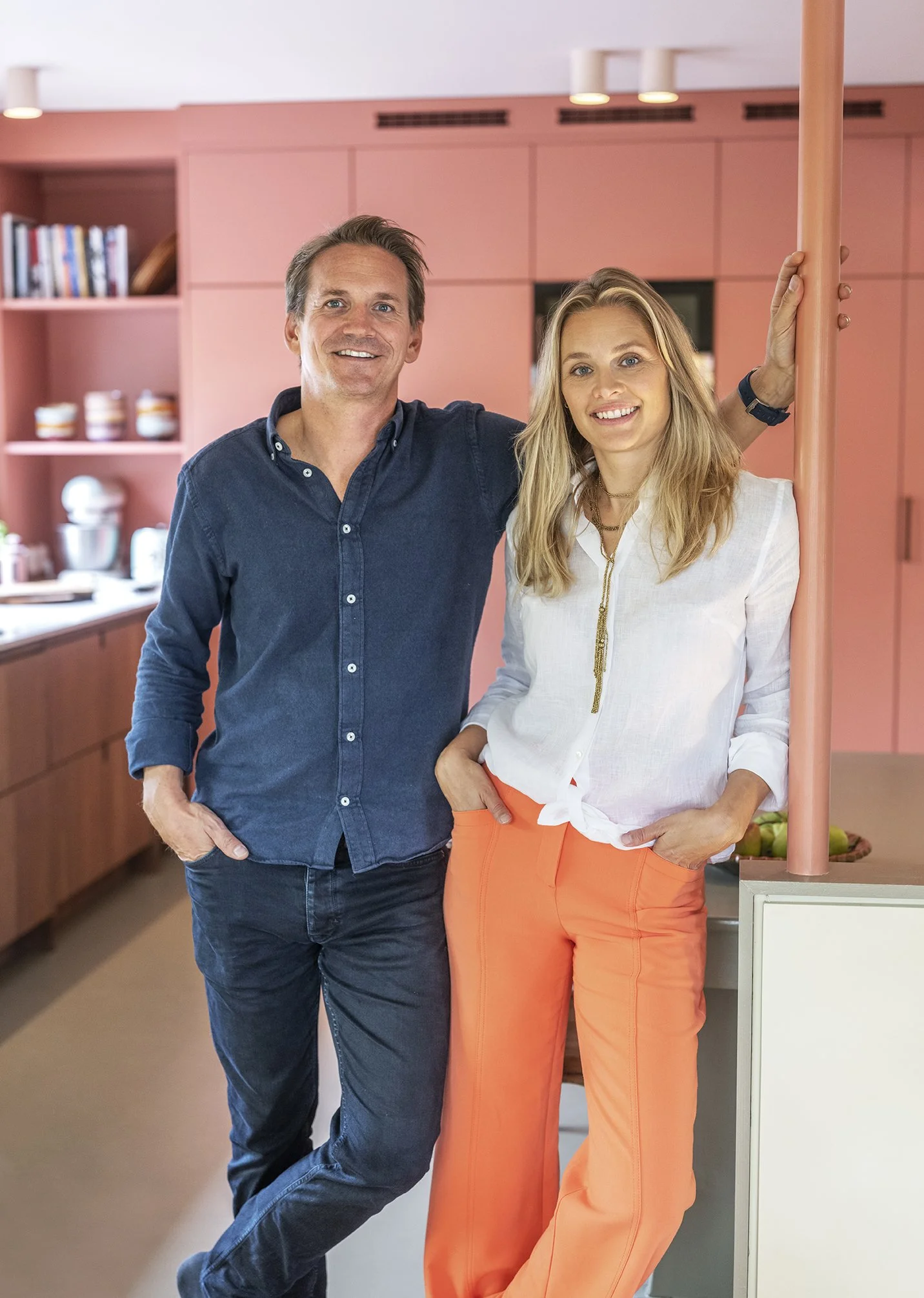
“It’s almost like the story of Thor Heyerdahl telegraphing his friend: ‘I’m going to sail across the Pacific on a balsa raft—are you in?’ And Herman Watzinger replying bluntly: ‘I’m in,’” says Herman Hagelsteen, managing director of NielsTorp+ Architects.
– Yes, that’s actually exactly how it was, laughs Sixten Stavelin, co-founder of FAX Arkitekter.
The two architect fathers had only met at two children’s birthday parties before they ran into each other one day at the intersection in Bislett. Both lived in apartments in Fagerborg with young children, and both had come to the same realization: If you want to break into the single-family home market near downtown Oslo today, you have to buy together.
“I remember we were both stressed out and on our way home with packs of diapers under our arms when Herman said in passing: ‘Hey Sixten, there’s a fantastic functionalist house for sale in Smestad that maybe we should buy together. Are you in?’ ‘Yeah, I’m in.’”
Risk-taking couples.
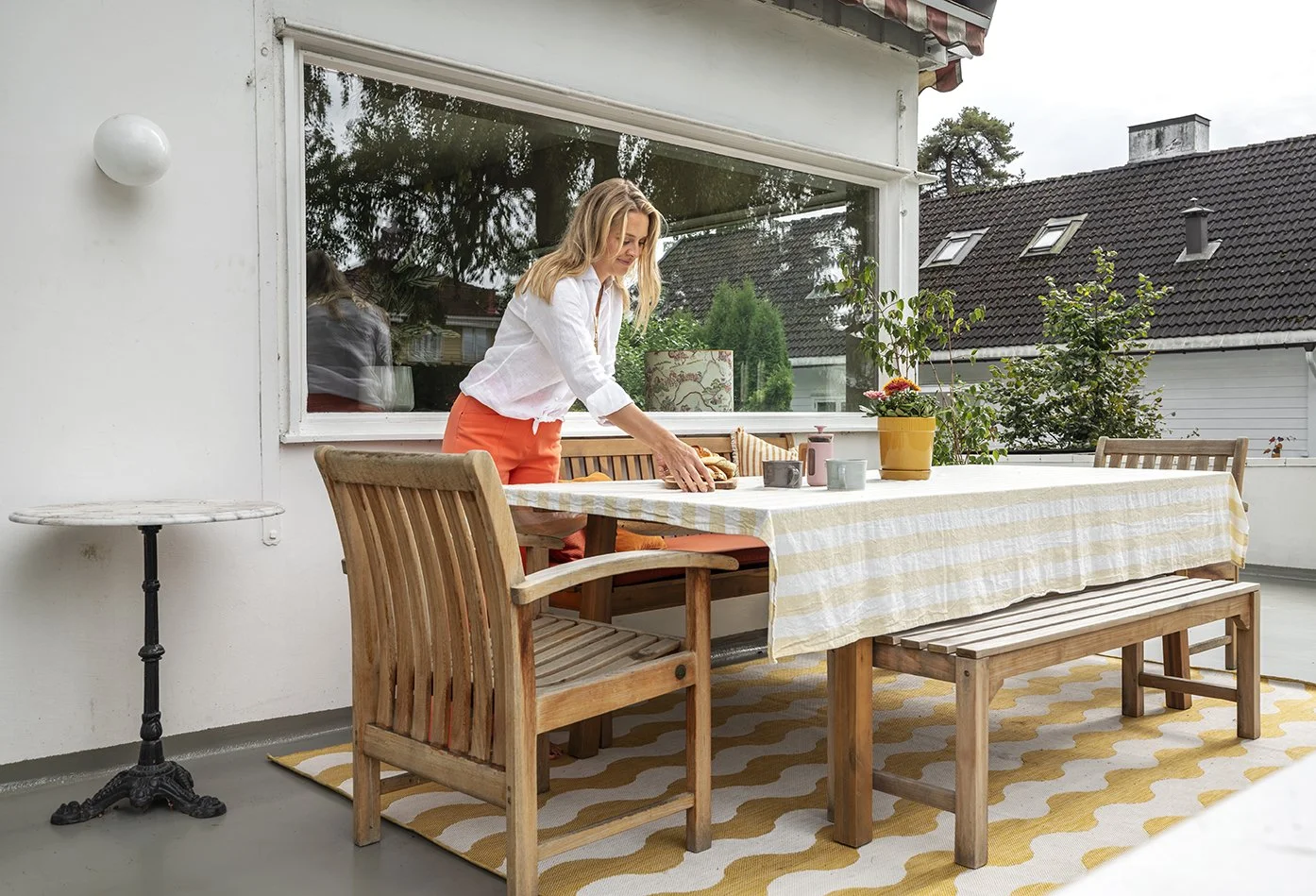
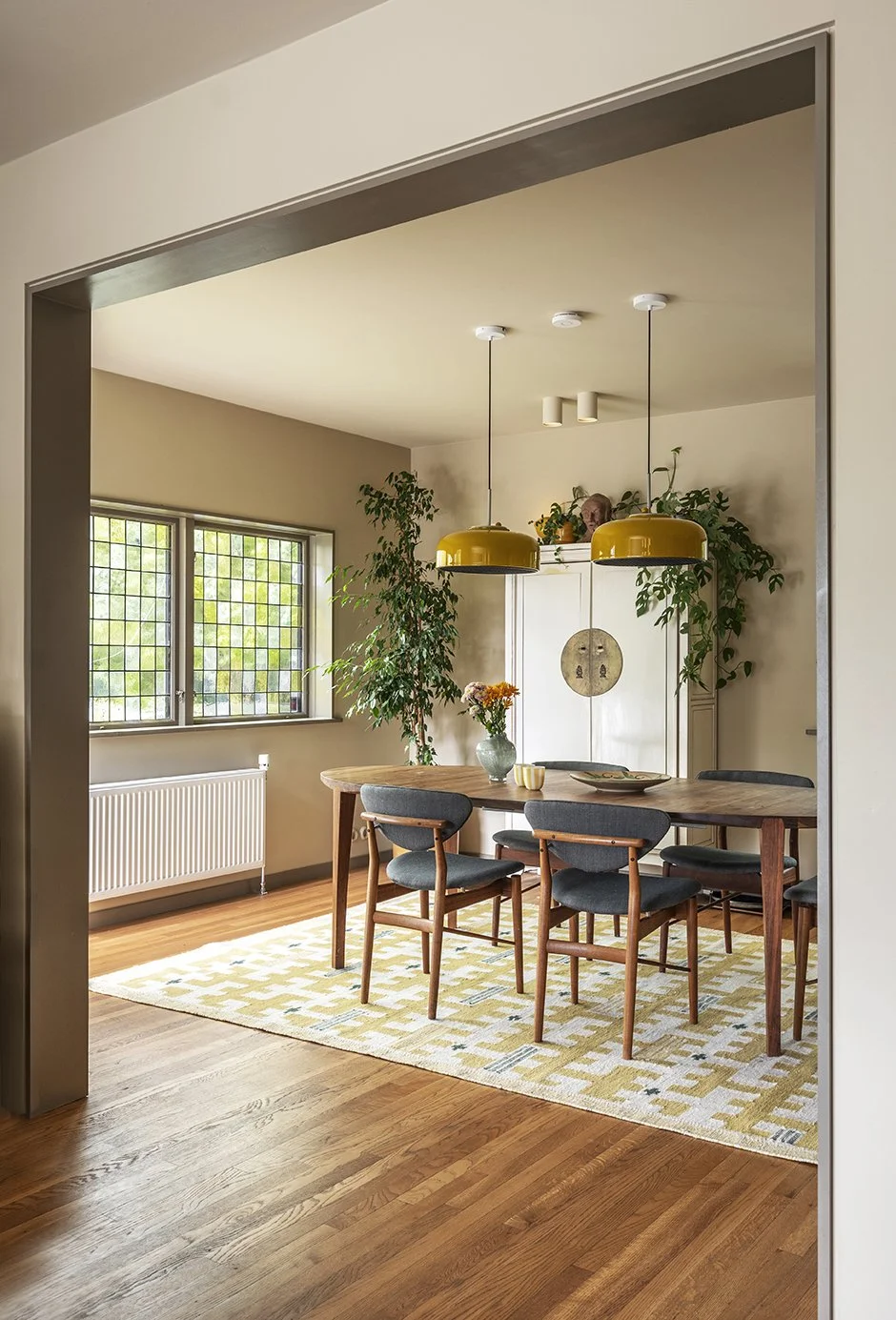
Tale and Herman Hagelsten are sitting and chatting with Sixten at the dining room table in what has become their living space on the ground floor. Sixten’s partner, Kaja Aasbø Stavelin, is looking after the couple’s youngest child on the floor above.
“We live in this fantastic gem of a functionalist villa from 1937, but we really shouldn’t have had the opportunity to do so,” says Herman, adding that they would never have managed it if they hadn’t been willing to take a risk.
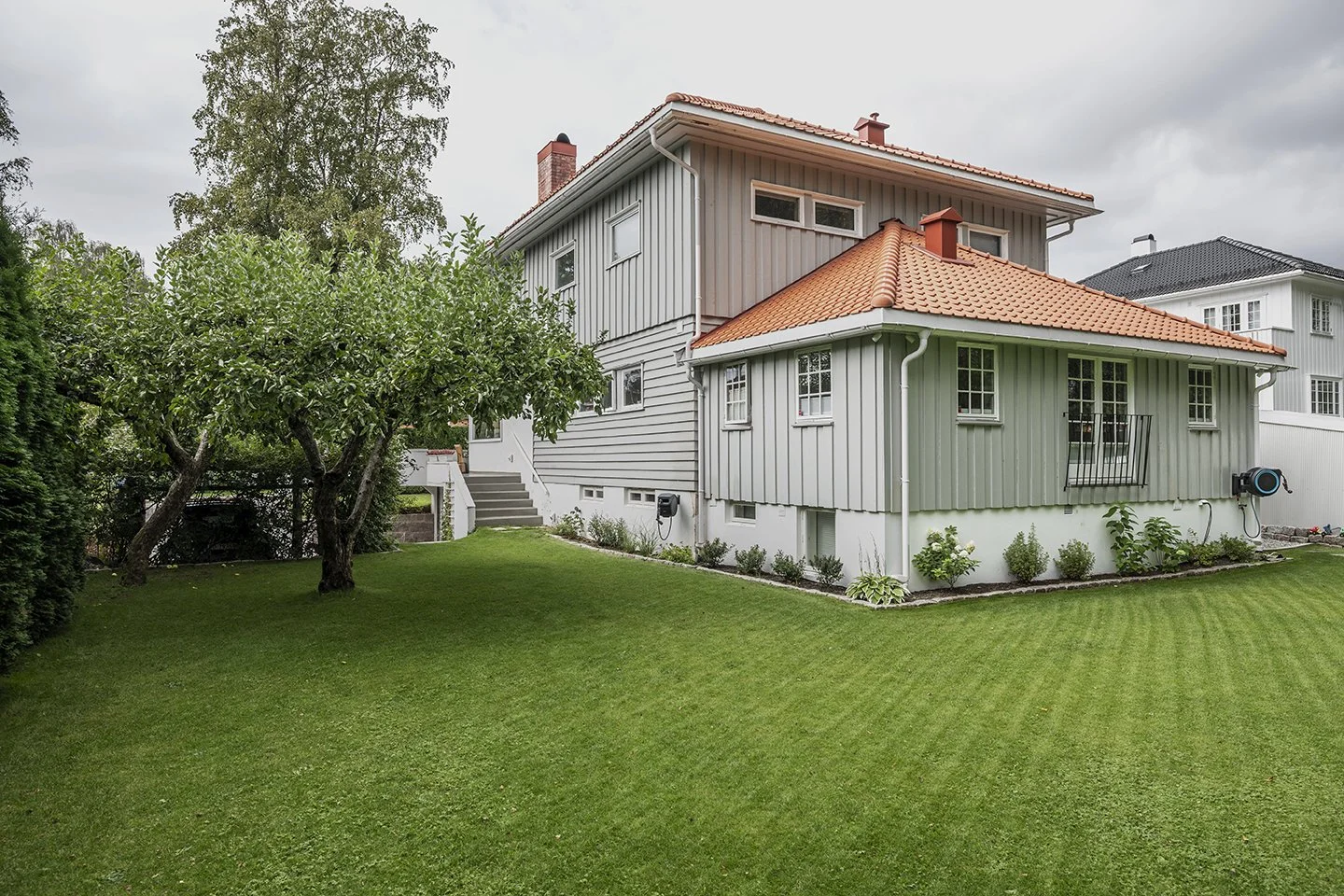
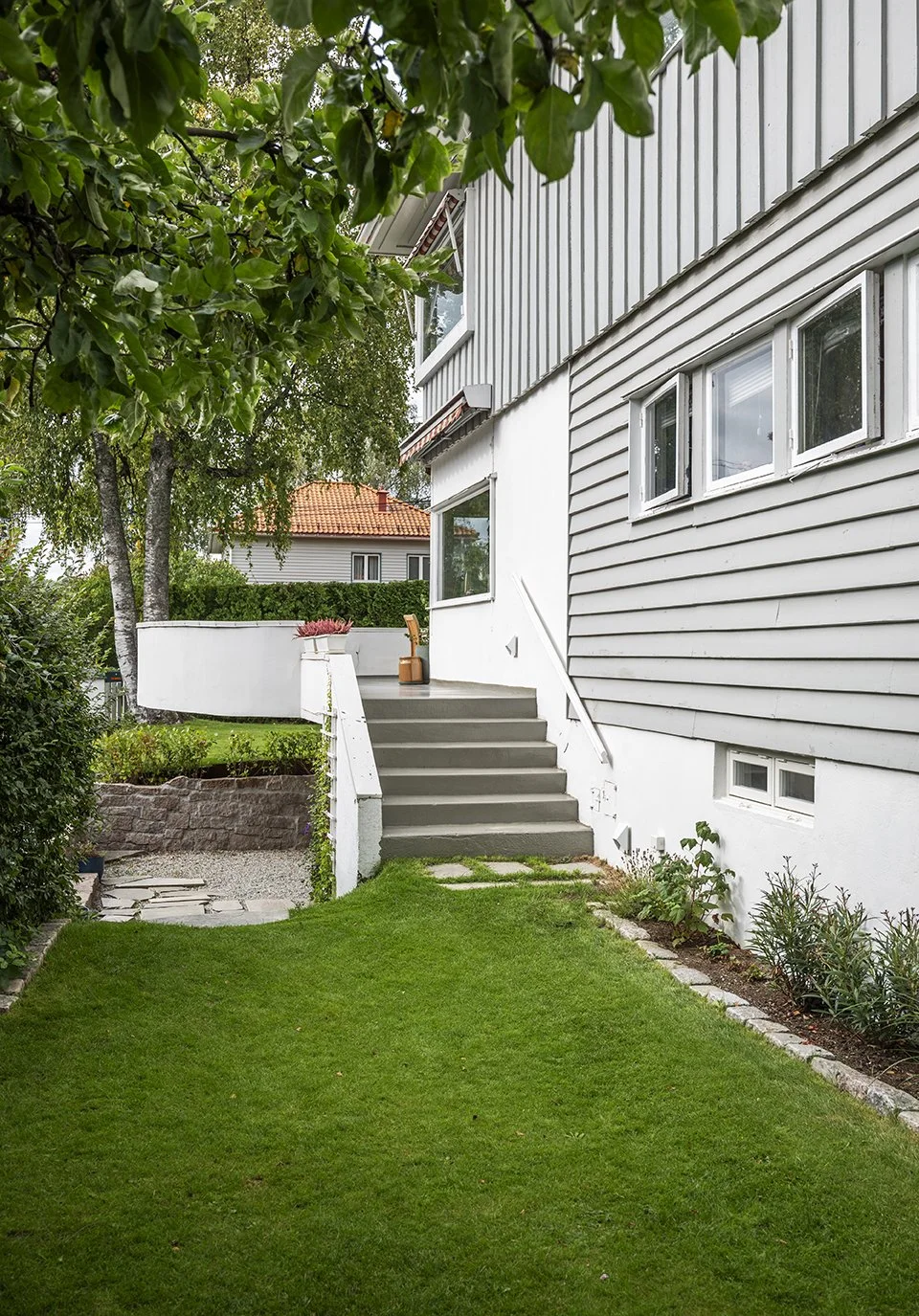
Most of the houses in the lower section of Holmenveien were built during the same period in the 1930s. The area is on the yellow list, which means that the facades are protected by the City Conservator, and it is not permitted to expand any of the spacious gardens. Norwegian farchitect Leif Egeberg designed the functionalist villa i 1937, which today has a little gate leading to the green and lush Smedstad Park.
- In this case, the villa had been owned by the same family since it was built. The 450-square-meter home was built as a multigenerational residence, with two horizontal units, so everything was in place to divide it into exclusive sections with already defined main entrances and separate driveways, explains Herman.
- The challenge was that the banks wouldn’t accept a mortgage on half a home that wasn’t subdivided, because half of it alone had no value, explains Sixten.
A nerve-wracking dance.
Against the bank’s advice, they ended up taking out a joint loan, under which all four of them acted as guarantors for one another. However, that loan could not be split up until the property was divided into separate units. - The bank said that if there’s a divorce now, or something goes wrong, the whole house of cards will come crashing down, says Sixten.
The two families set about renovating the old building and took out a construction loan on top of their mortgage before they had received the go-ahead from the City Conservator and approval from the Planning and Building Agency.
- We were pretty stressed out for a few months. We also had to get the basement rezoned so we could keep this financial juggling act going by renting out our respective rooms, says Sixten.
A solid starting point.
- It was an advantage that there were two of you architects,” says Tale, recalling that the two husbands spoke on the phone for several hours every day.
Herman and Sixten set up a shared drawing repository and took on the role of construction managers for the renovation, overseeing the entire project as a single construction project with one team of builders.
- When we bought the house, we knew there was a lot that needed to be done, but we had gone over and checked that the structure and the foundation were sound. All we’ve done on the exterior is install drainage around the house and replace the roof,” explains Sixten.
The biggest change made on the interior was tearing down the entire floor partition between the two units.
- We first ran some tests to see if we could keep it as it was, but it was basically just a few planks laid on top of some beams. We could stand in the different floor and talk without having to pick up the phone,” says Herman.
- The floor was constructed using impact sound insulation boards, reused stucco plaster, and a suspended ceiling in acoustic beams, which means you can’t hear the kids running around on either floor, explains Sixten.
A riot of colors.
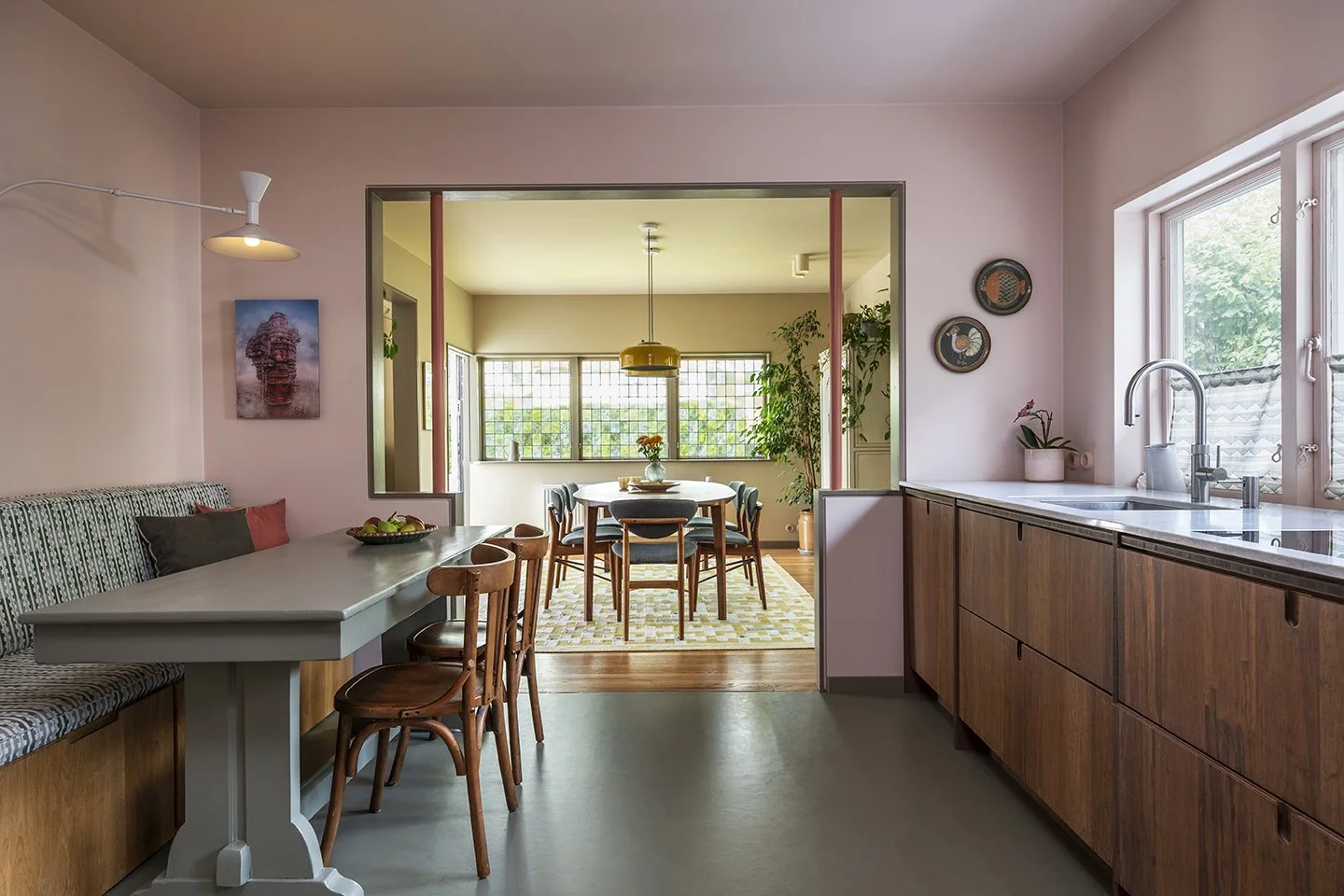
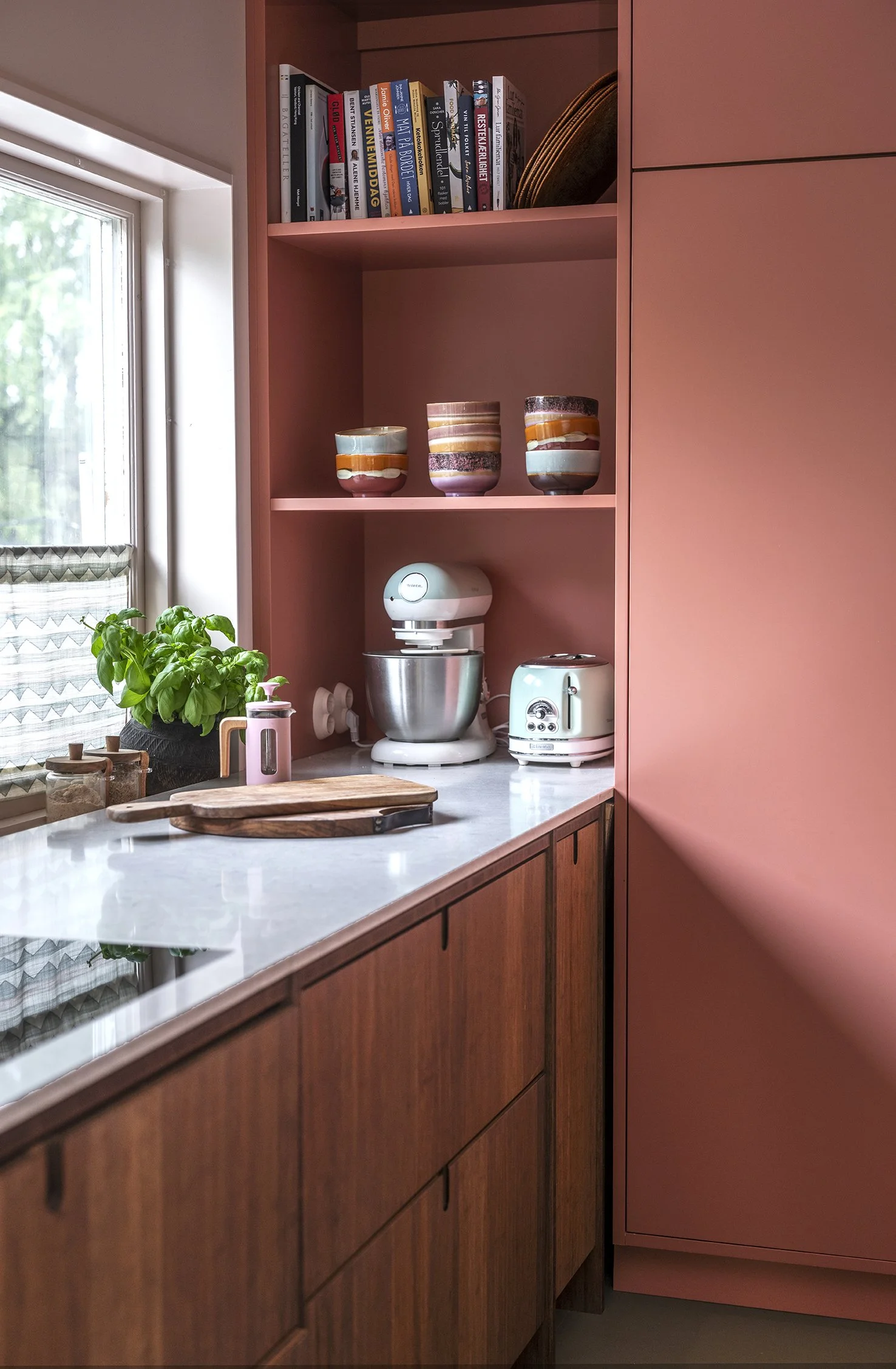
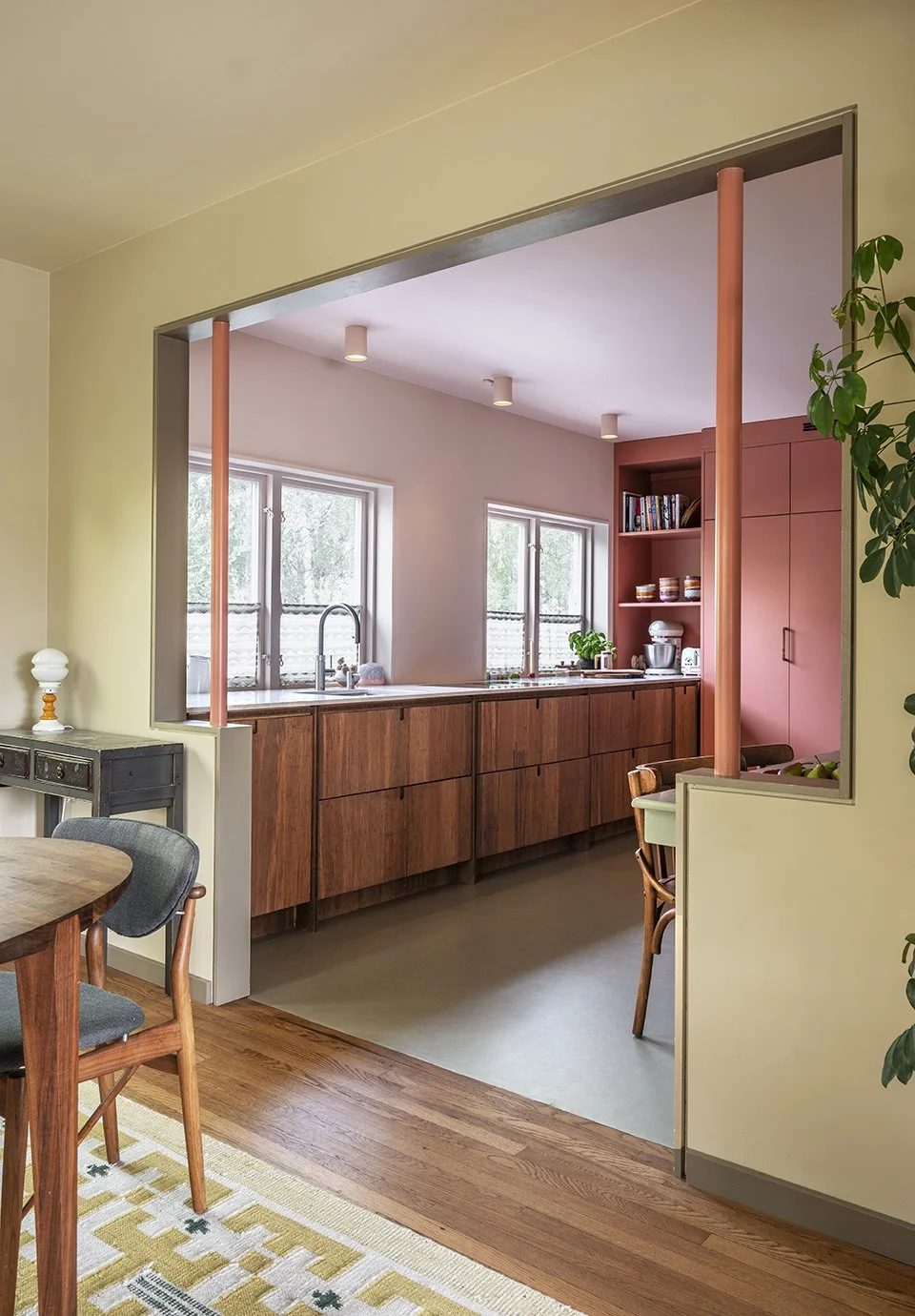
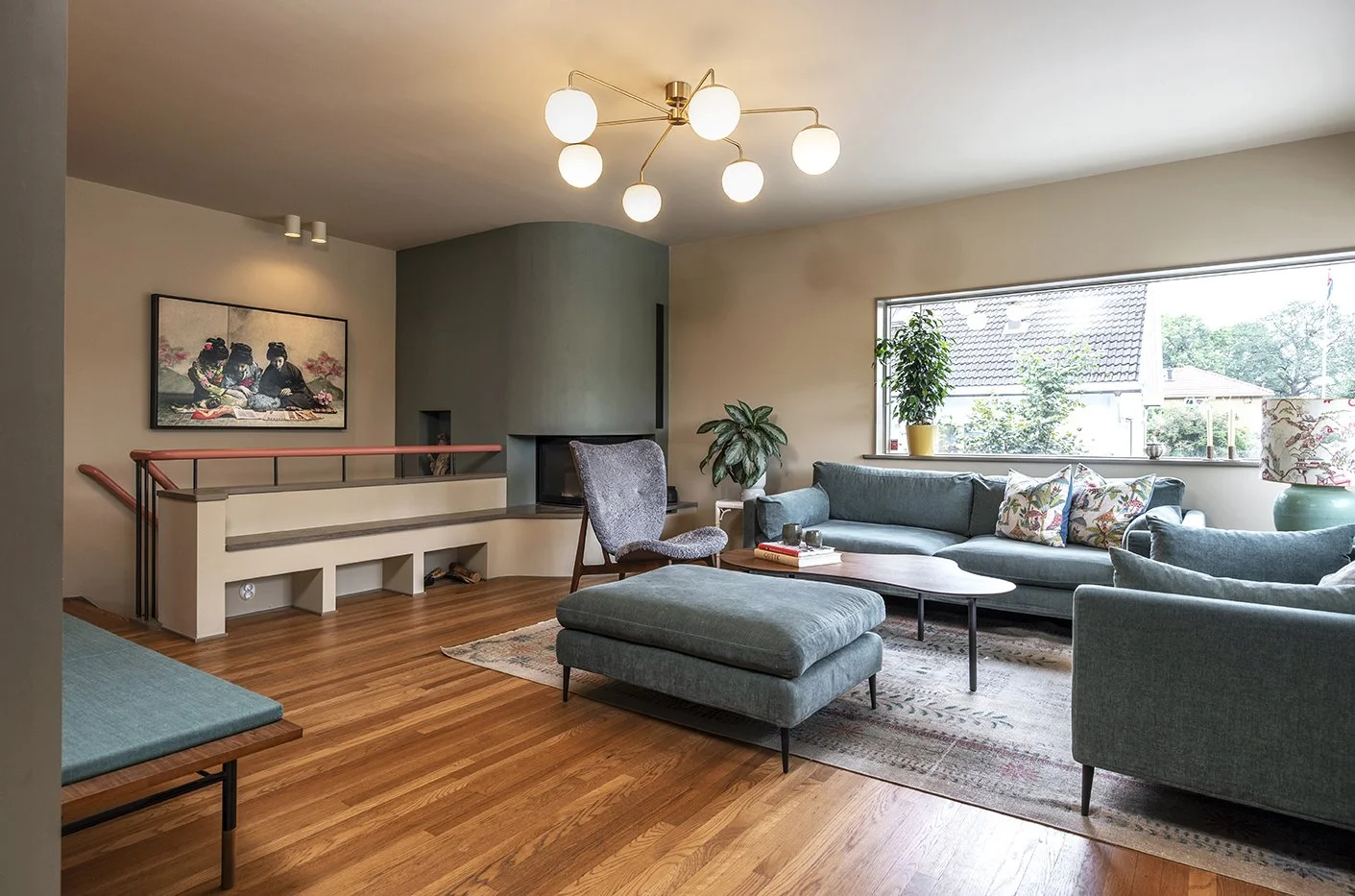
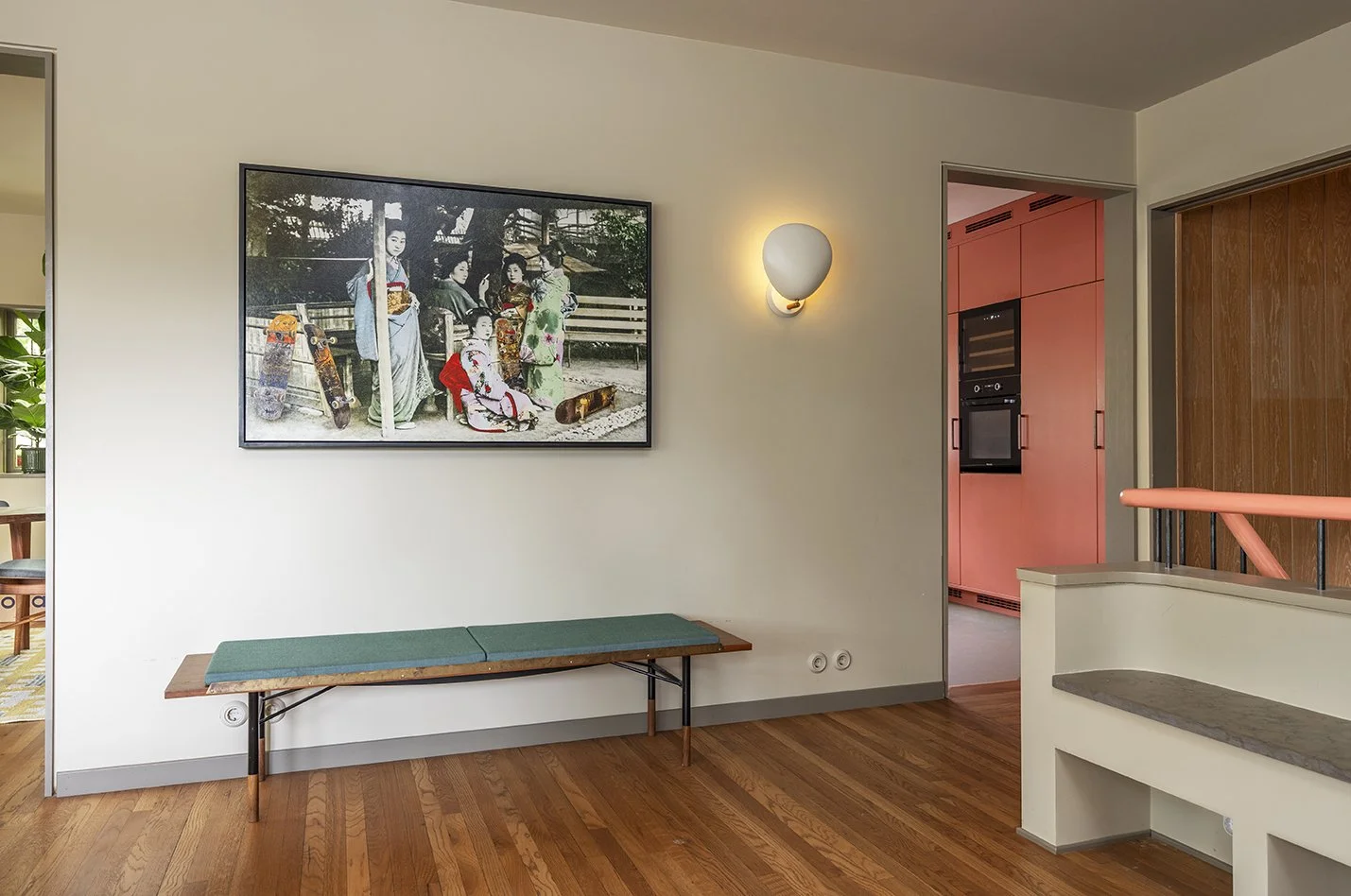
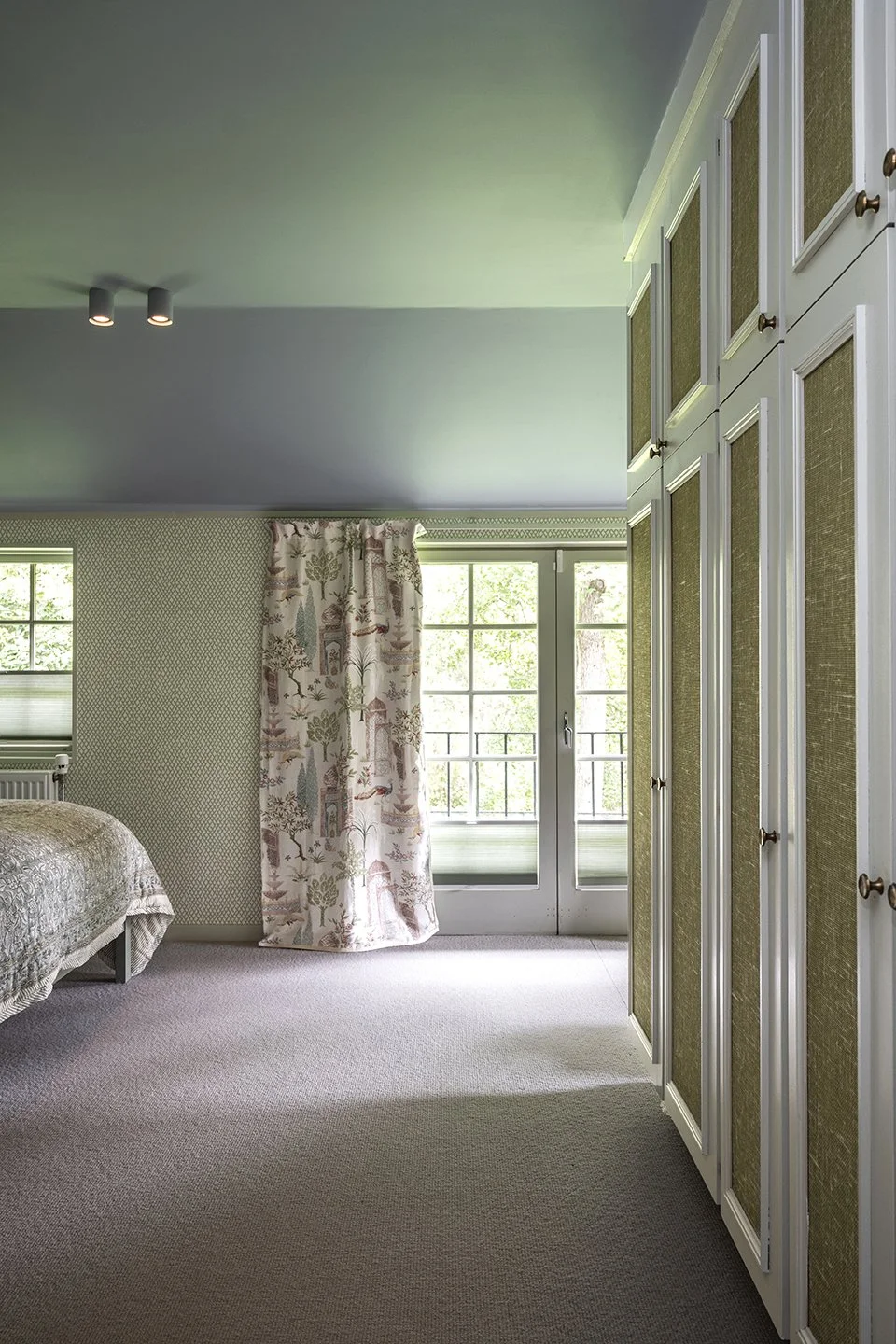
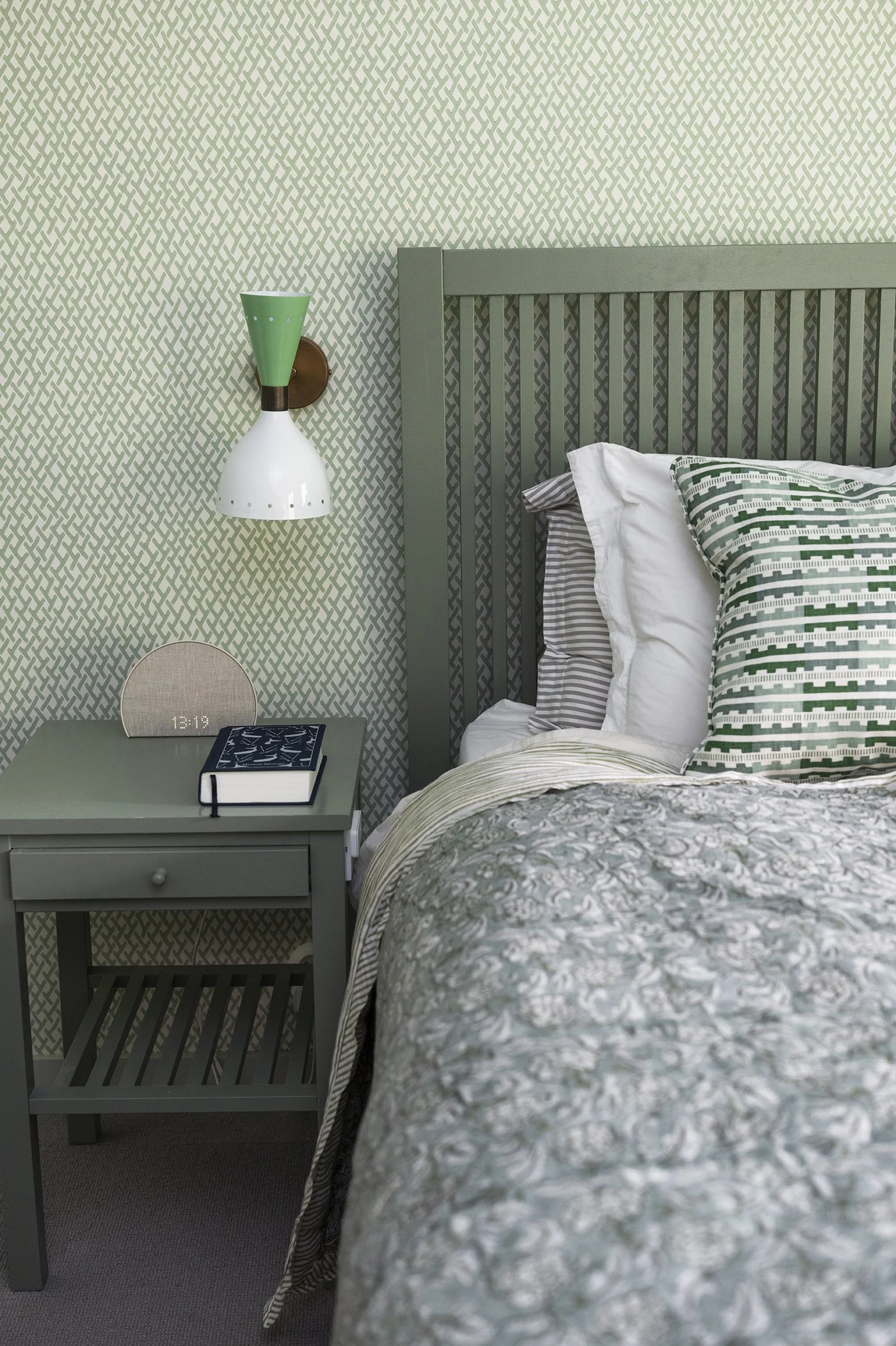
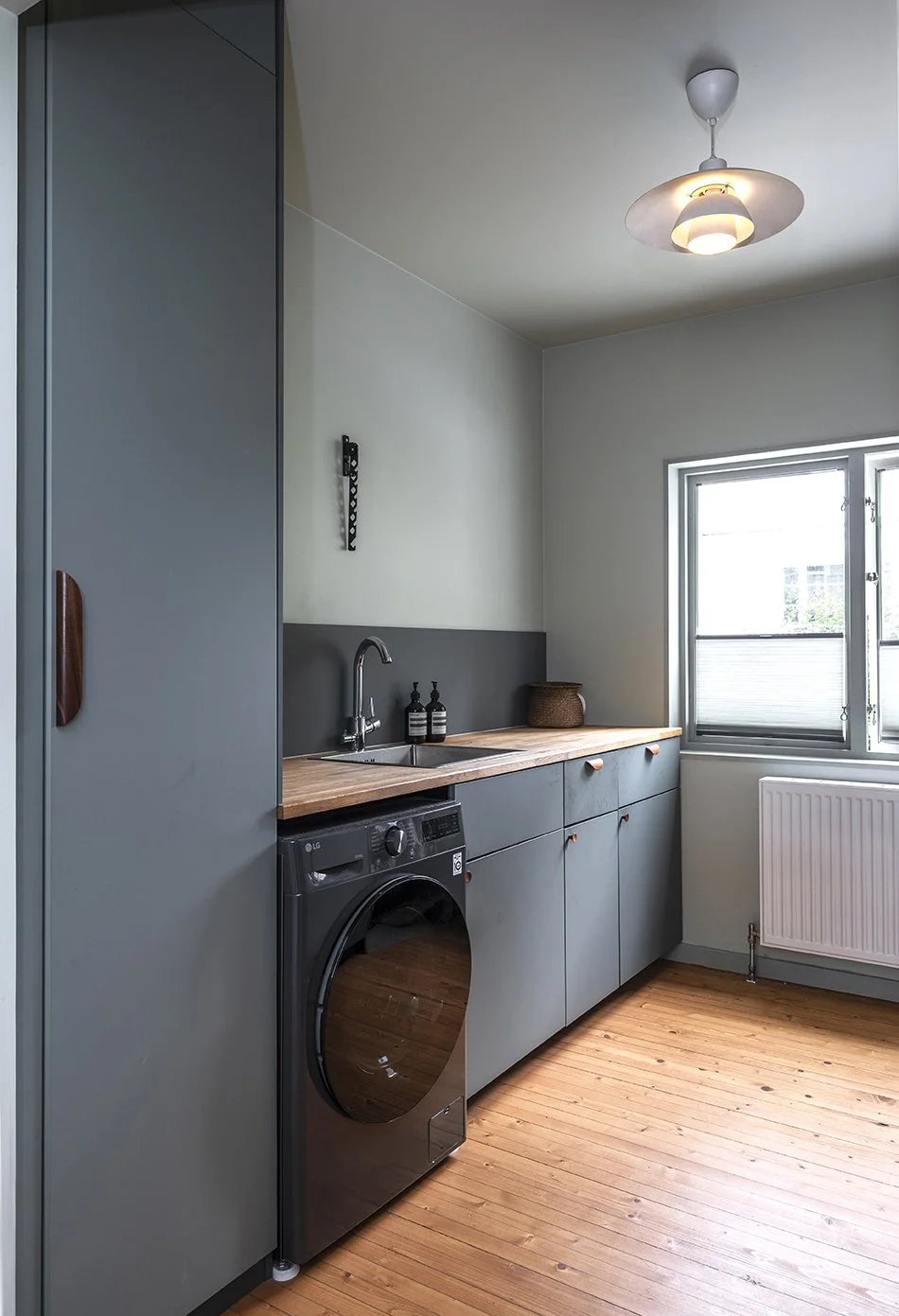
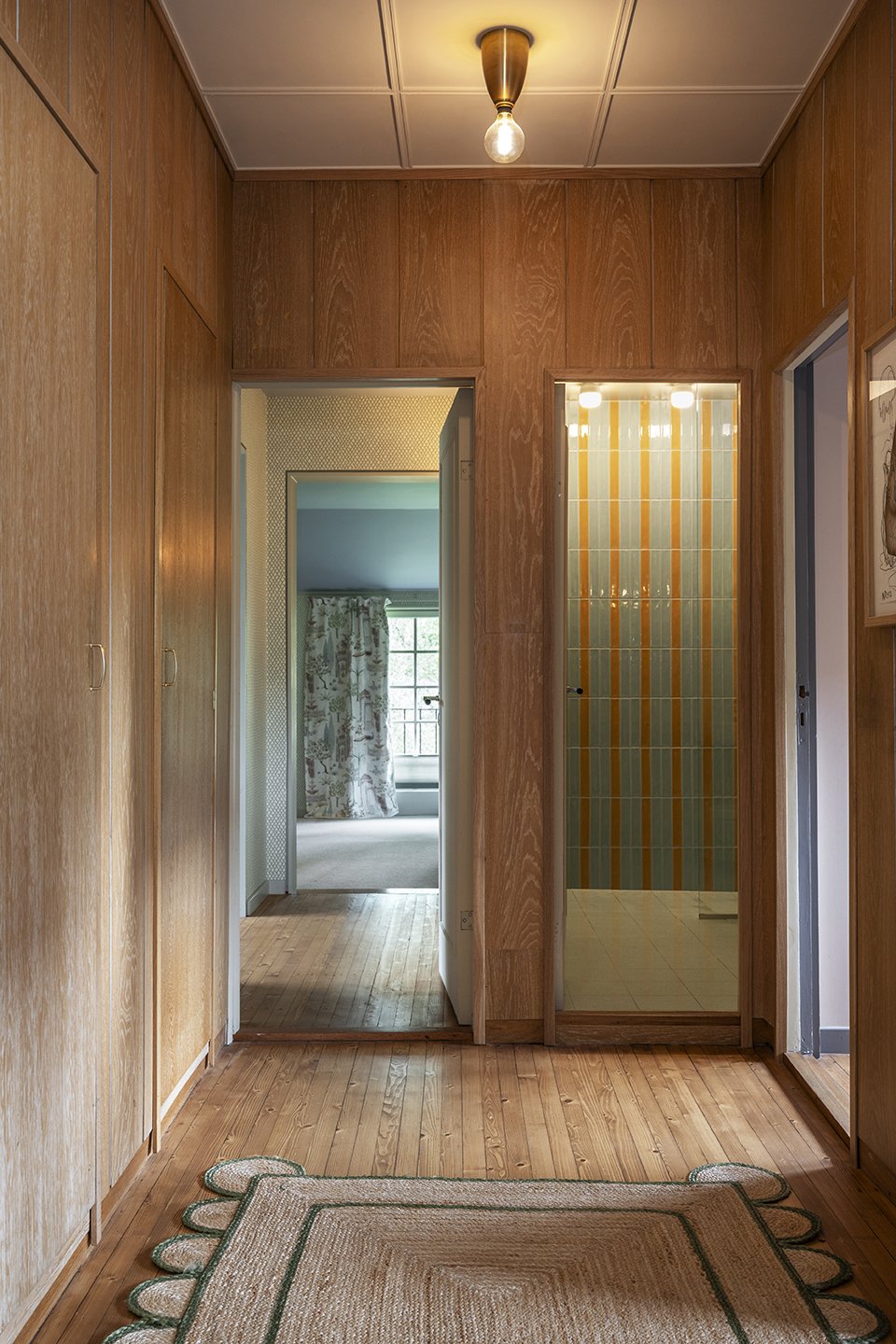
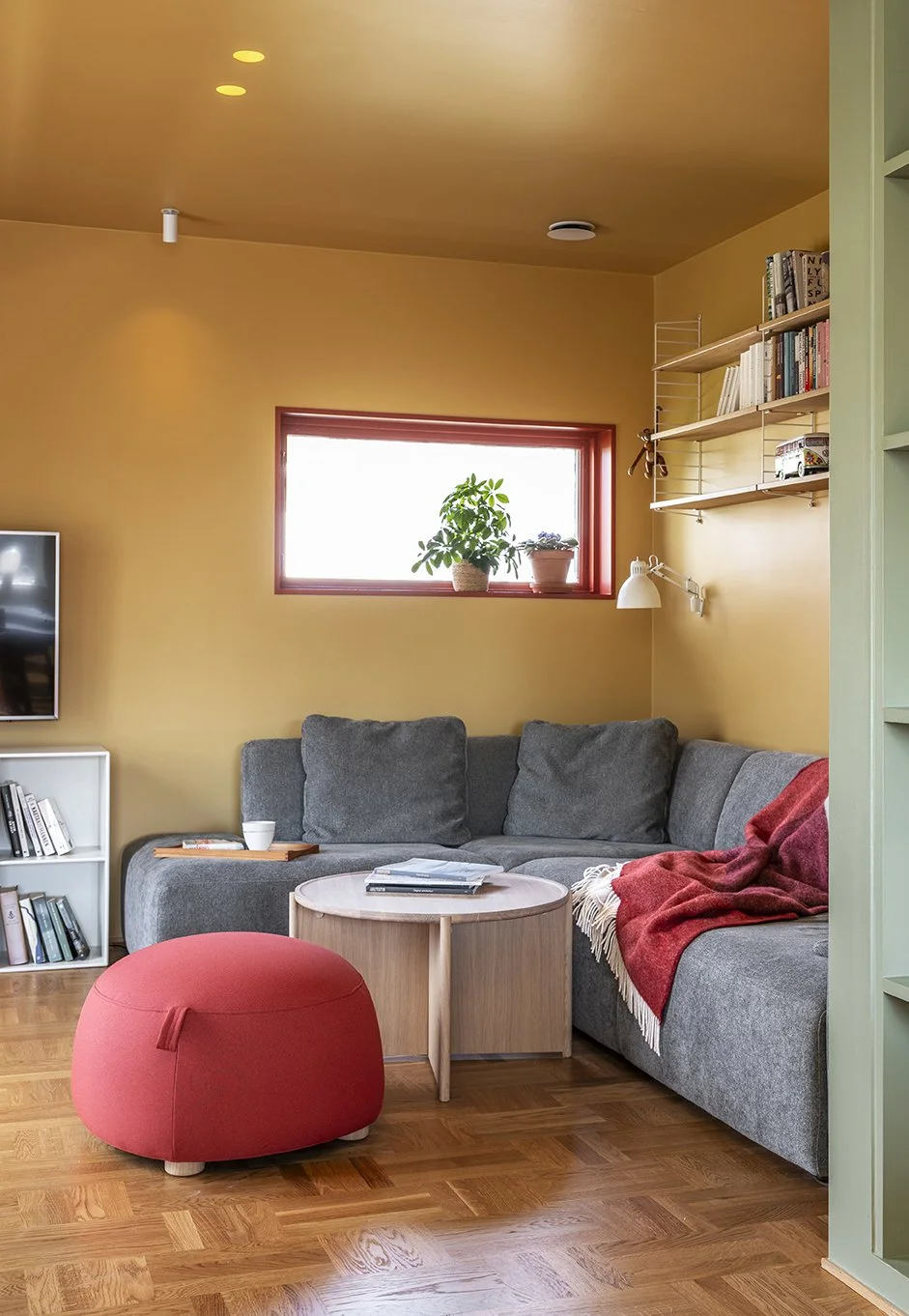
Downstairs at Hagelsteen, twenty-six different colors flow through the rooms in striking harmony with the furniture and interior details. Upstairs at Stavelin, nineteen colors help highlight what appear to be original functionalist details, but are actually reinterpretations.
- We had a clear vision from the start and planned the color scheme and furnishings for each room individually before construction began, says Tale, who has used a lot of color in her previous work as a fashion designer.
She enlight that many people have the misconception that functionalist homes were austere and monotonous.
- That was confirmed when we started peeling back the layers inside. Many of the colors we’ve chosen have been used here before, says Tale.
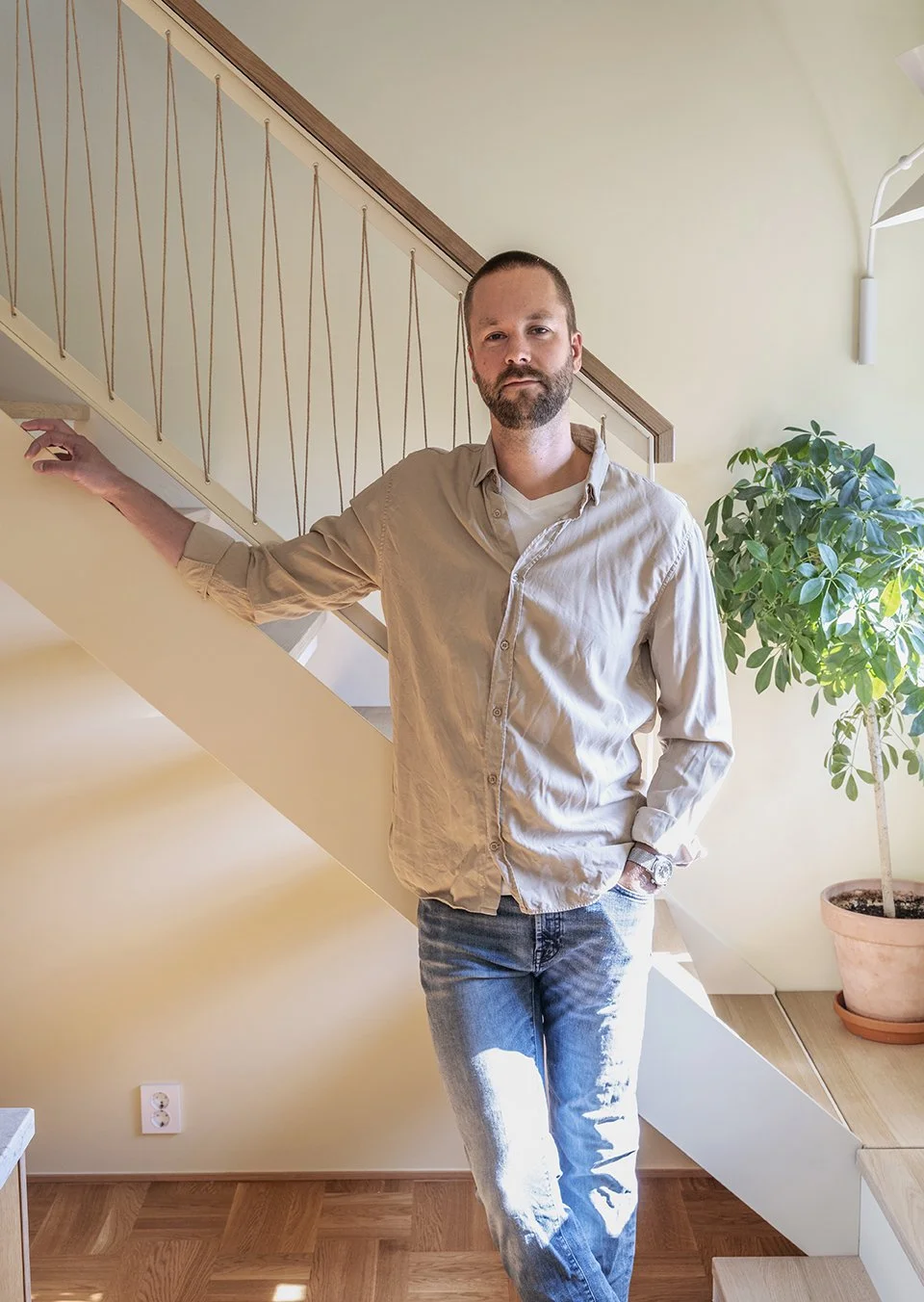
“Since we took on a high-risk investment that pushed us to the very limit of what we could afford, we’ve used every architectural tool at our disposal to squeeze as much quality and custom solutions as possible out of every penny,”
— Sixten Stavelin, founder and partner Fax Arkitekter.
A guideline.
Sixten emphasizes that a successful renovation is the sum of countless choices, where the new elements don’t need to scream that they’re new.
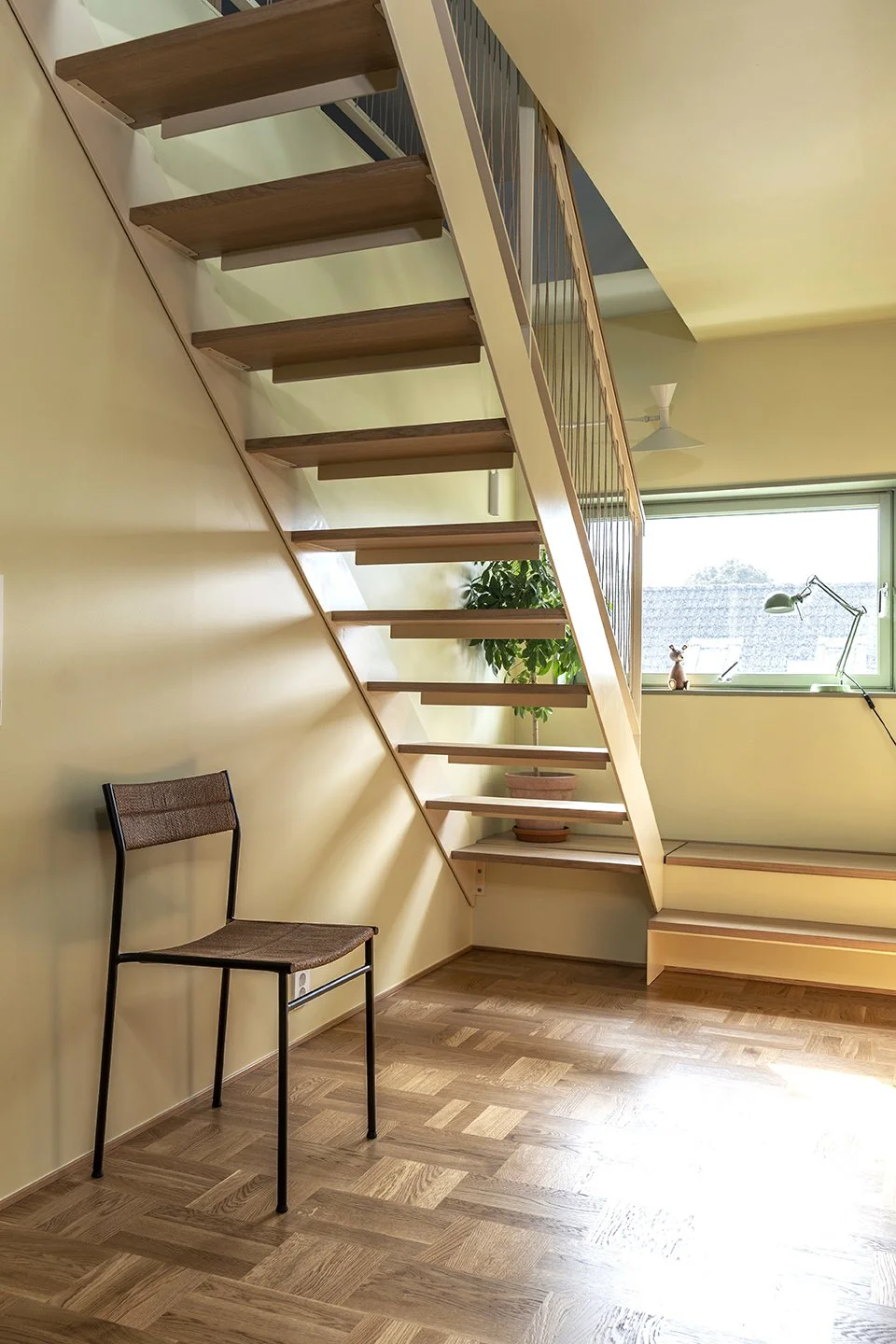
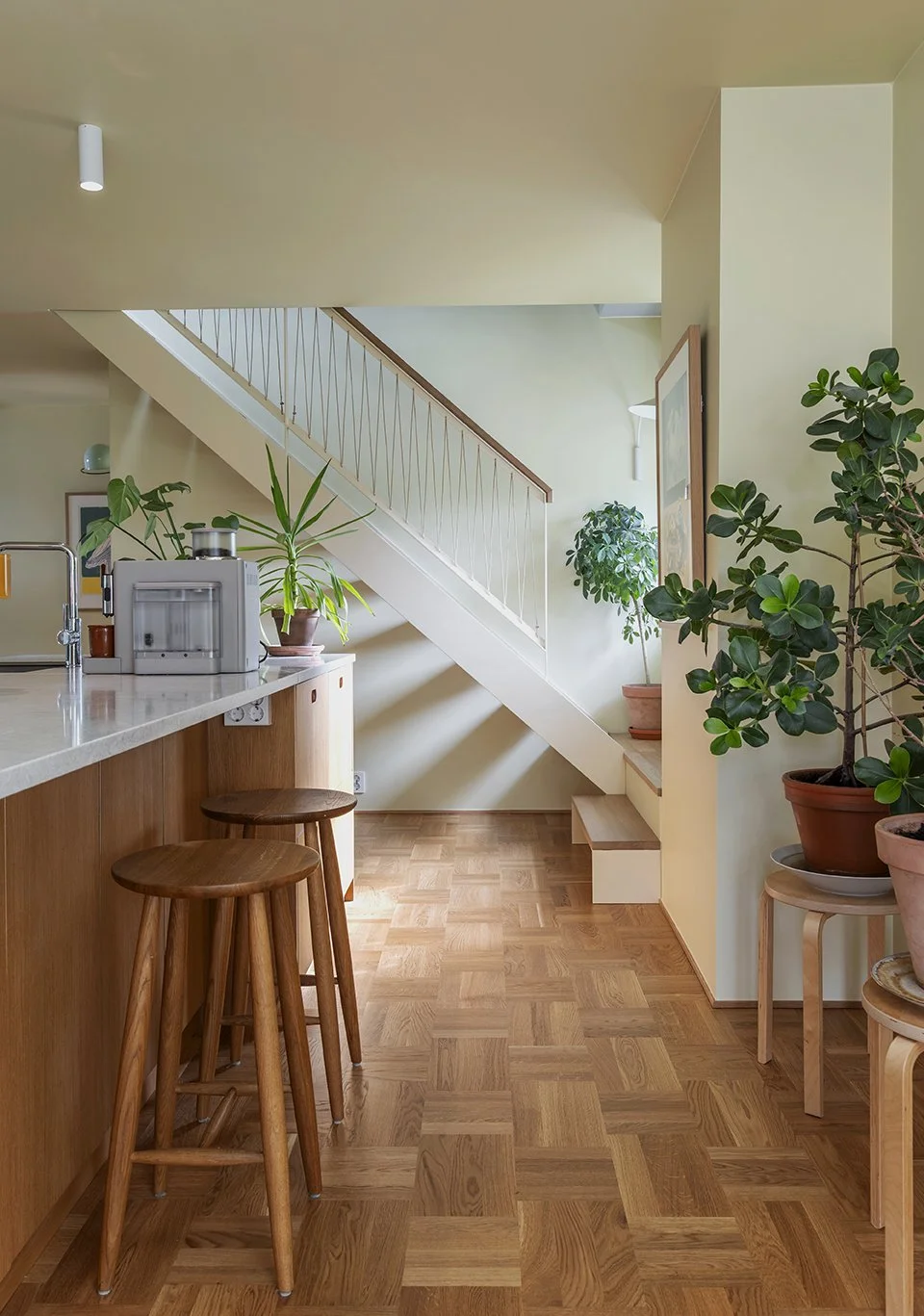
- Here, for example, you don’t notice that the large new feature is the two-story fireplace with a bench and railing. That entire piece of furniture wasn’t there before. Herman designed it.
When you renovate a house like this, you don’t have to fight against the existing structure. The existing architecture becomes like a golden frame, a guiding principle, where the job is to optimize and bring out the potential that’s already there, says Herman, adding that what you might not notice is that the arch of the fireplace echoes the arch of the balcony.
Tailored to your needs.
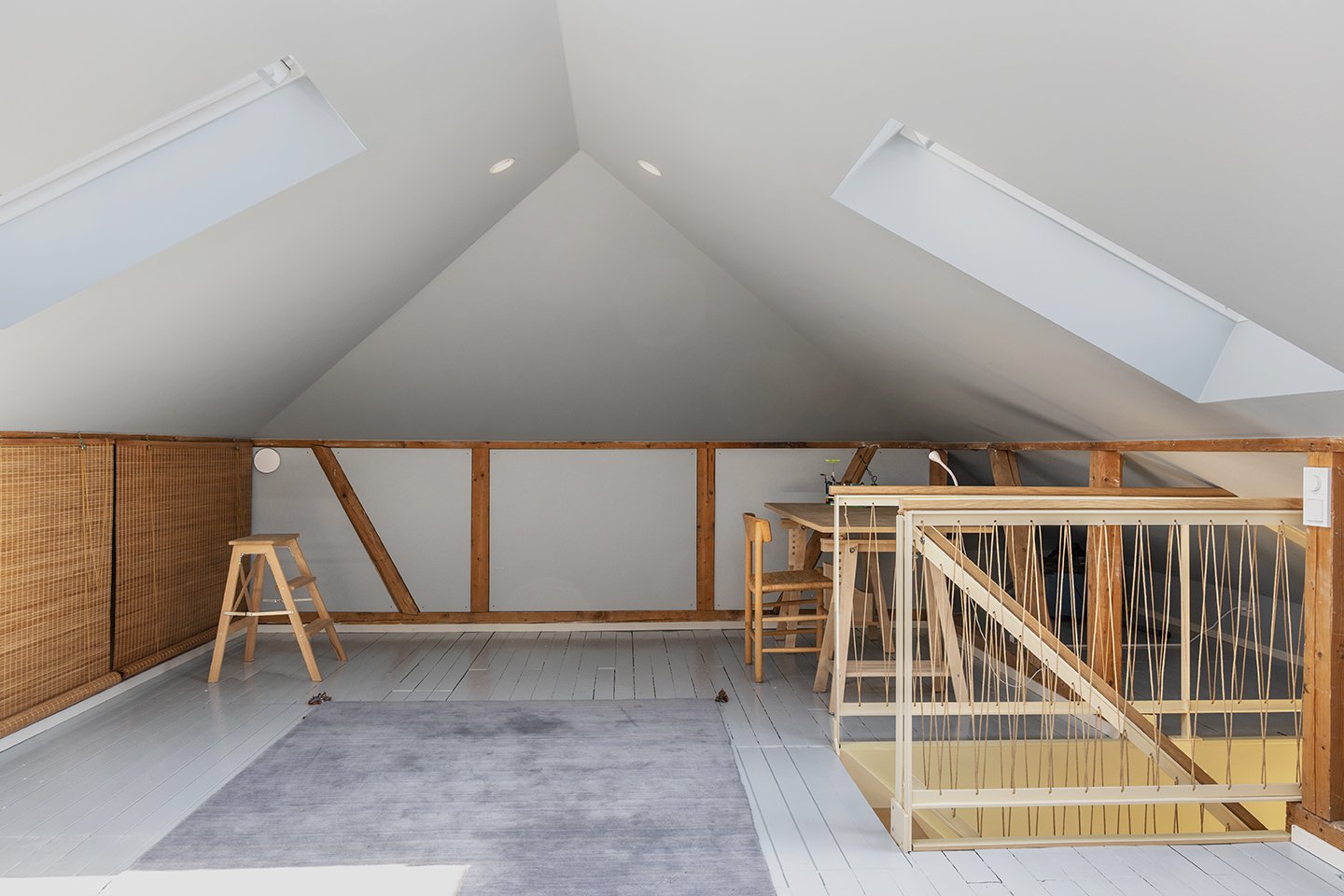
When the second-floor floor was torn out, the walls came down too. That allowed them to make better use of the space upstairs at Stavelin's.
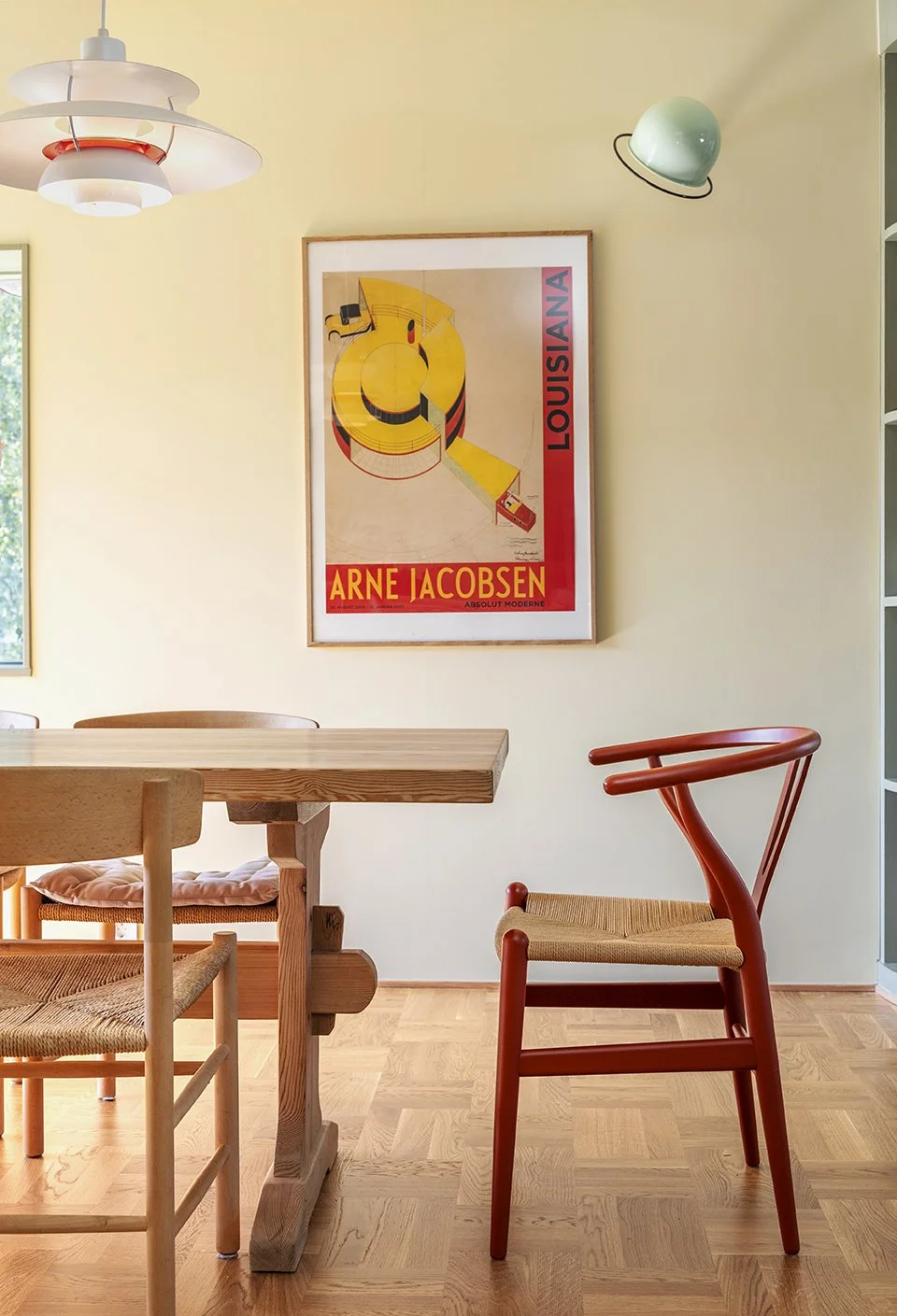
For us, it would have been natural to incorporate the kitchen into the living room, creating a long, open living space, but we love cooking and wanted a kitchen island we could gather around. Instead, we prioritized an intimate living room that we find super cozy.
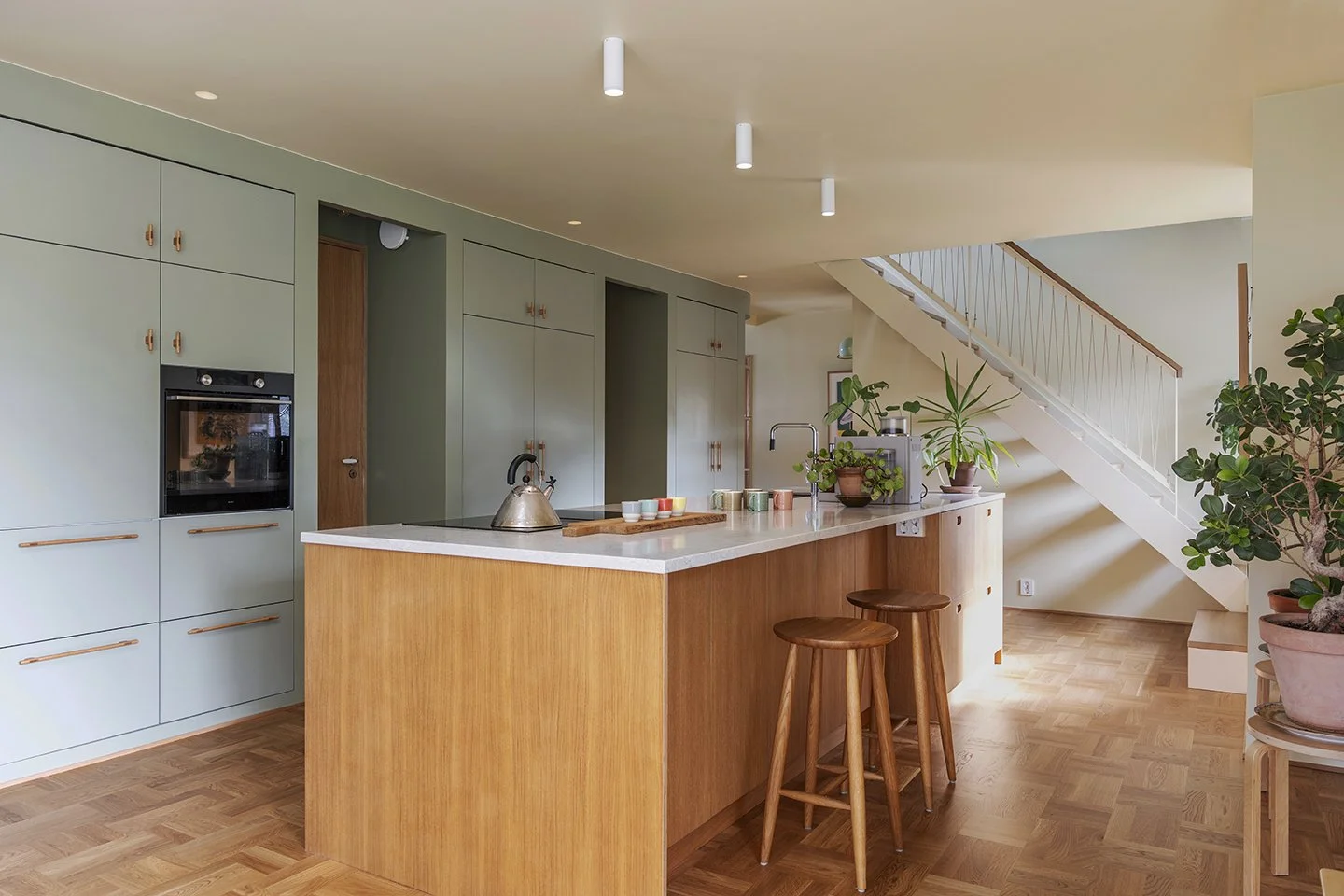
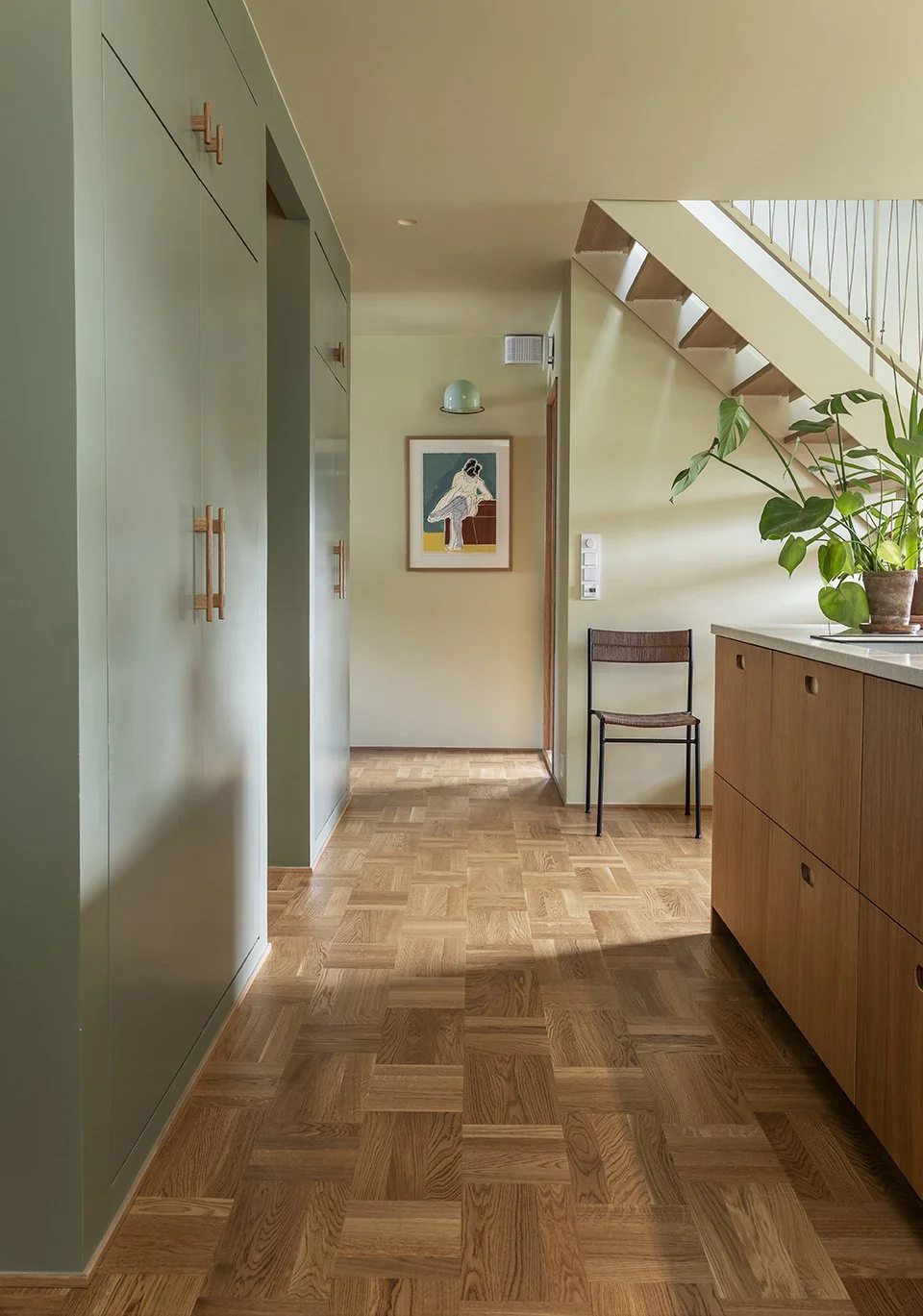
Just as with the Hagelsteen's fireplace, the original arch in the Stavelin hallway became the guiding element for the kitchen design, where the back wall is covered with a row of cabinets.
If the row of cabinets had had a square end, it would have been awkward to walk around the corner from the hallway. With an open, rounded shelf in the corner, you get sightlines as soon as you come up the stairs, which feels completely natural.
Lasting value.
On Herman and Tale’s floors, the floor plan suited their situation so well that they didn’t need to make any major changes.
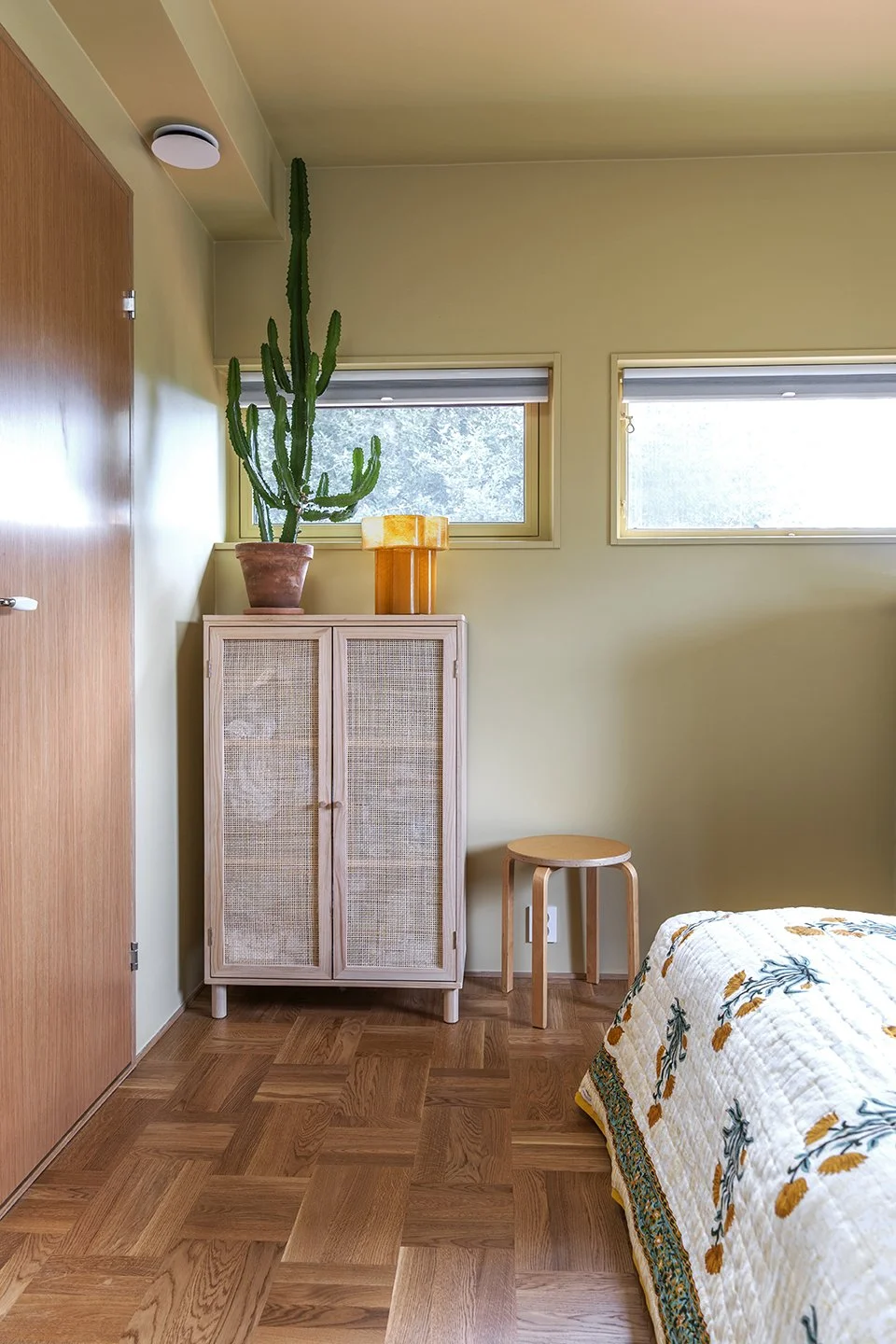
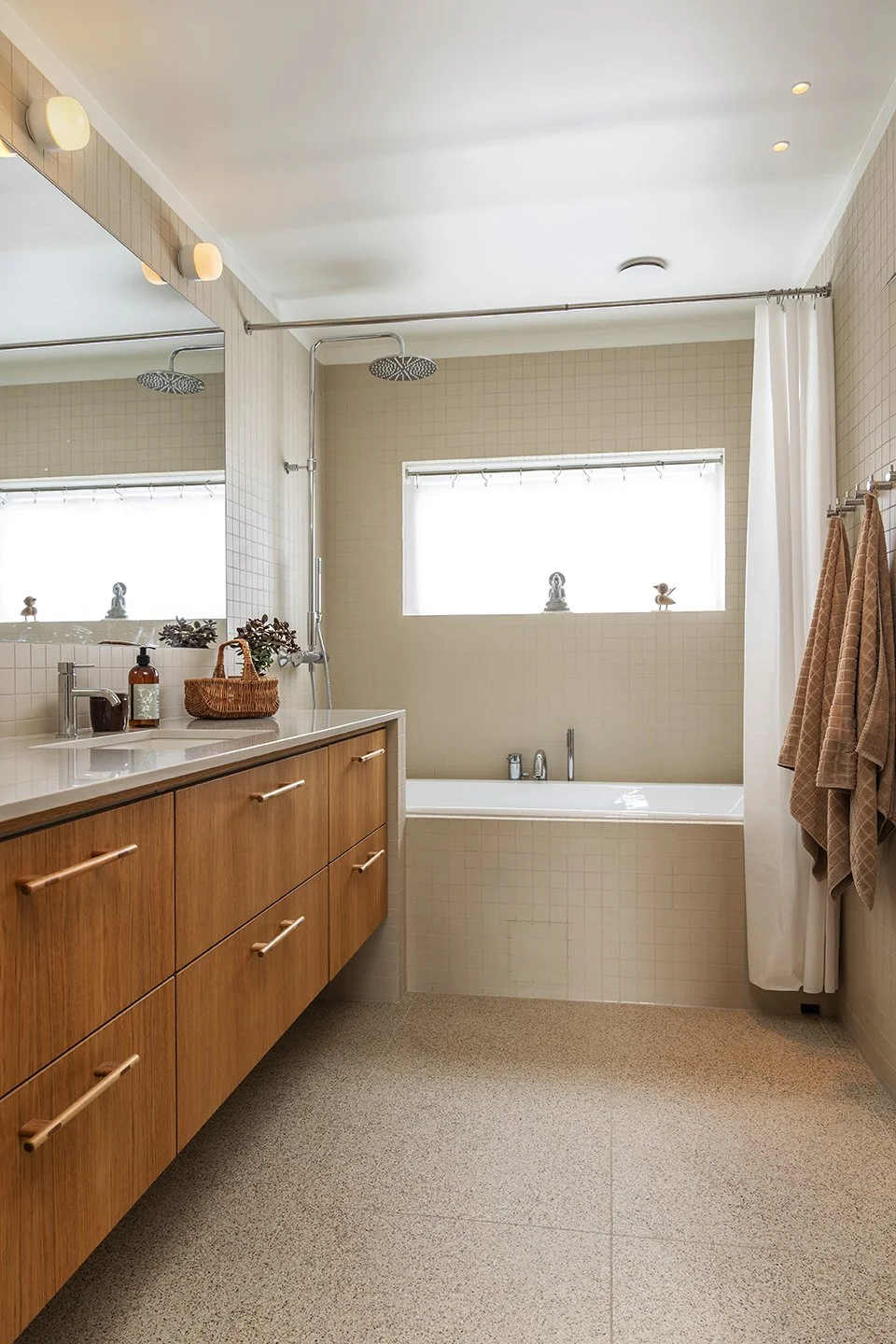
“We’ve kept many of the functionalist elements on our floor, such as parts of the original wall paneling, leaded glass windows in the dining room, and nearly 90-year-old oak parquet flooring,” says Tale.
“When you have a large budget, it’s very tempting to remove older elements, just because you can. We’re very happy with what we’ve kept. The ultimate luxury is time—you can’t buy that, says Herman.
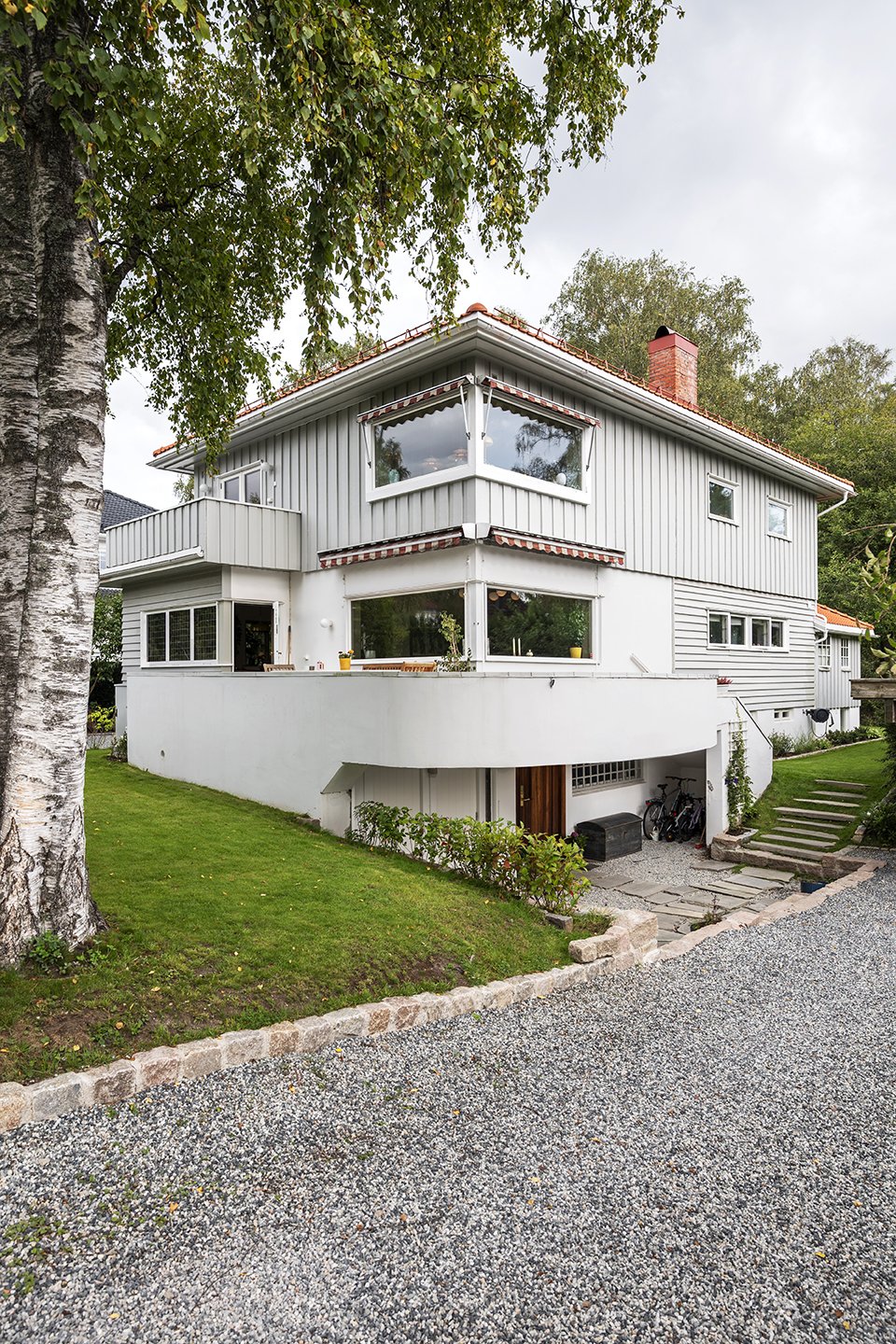
Two years after moving in, they still have to pinch themselves.
– Every single day, the three of them agree around the table.