The Couple Who Studied Humans but Forgot to Hire an Architect.
A psychologist couple went from designing their own house to ending up with a prefabricated house. It didn't occur to them to hire an architect.
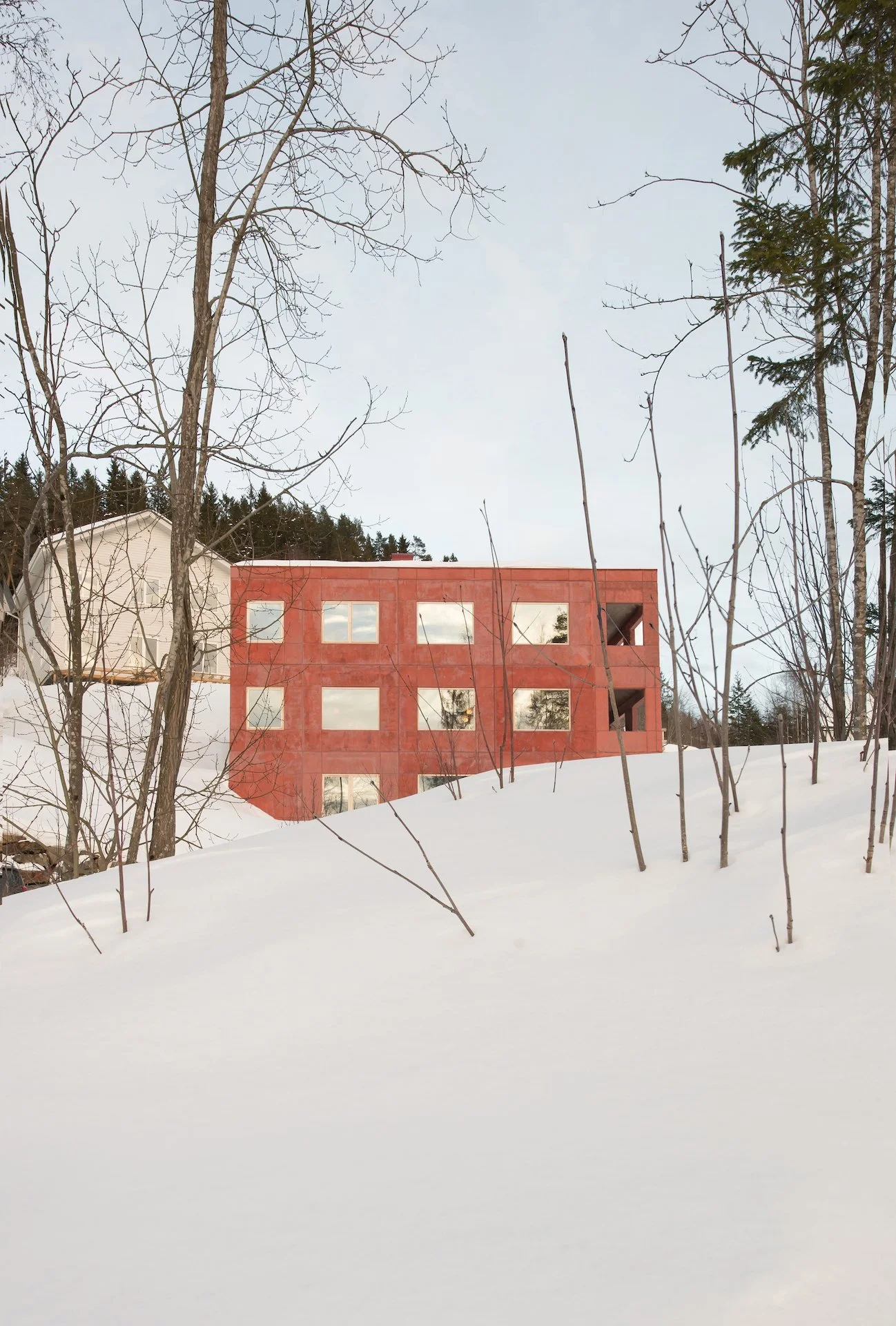
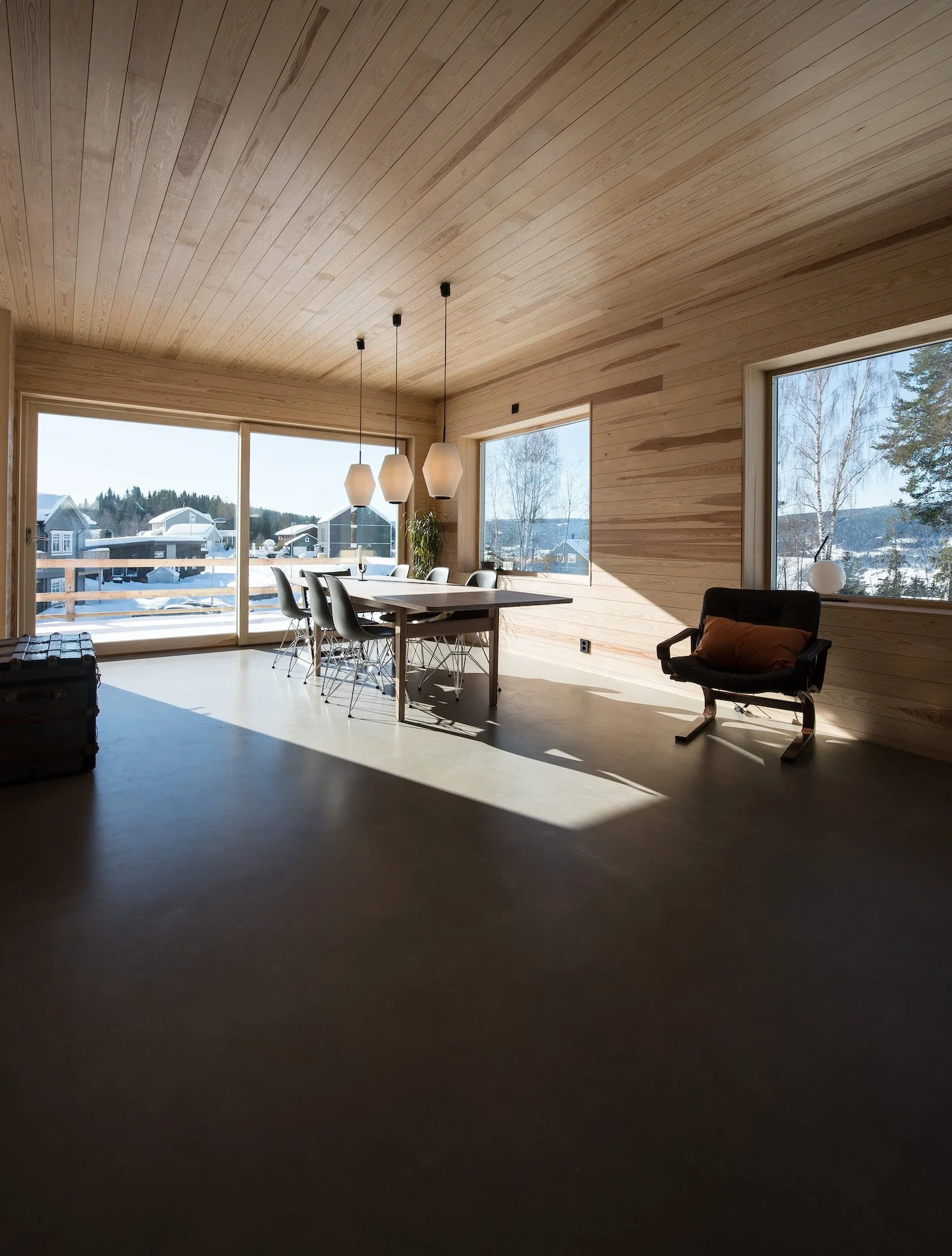
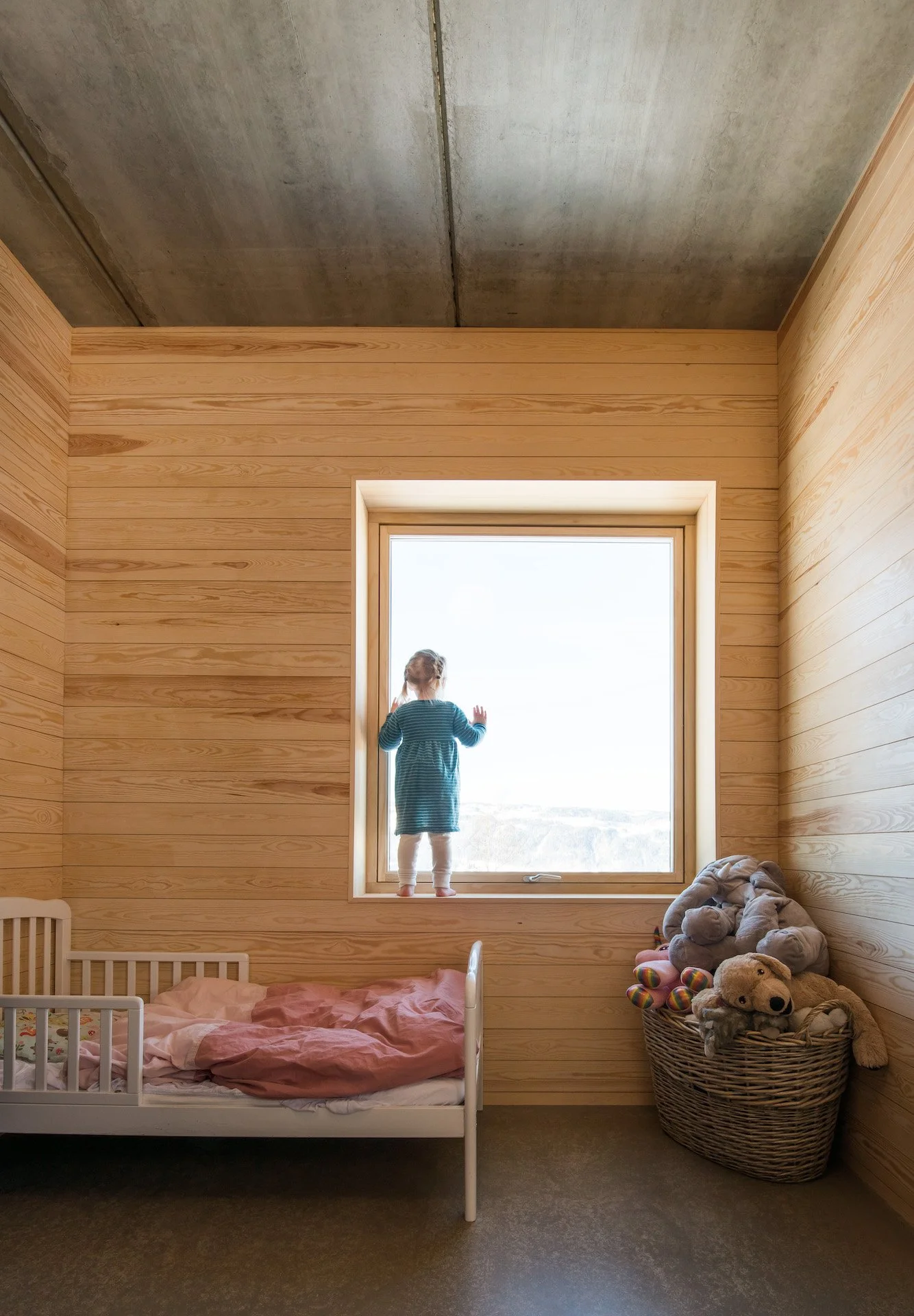
SHARING The house is conveniently divided, with grandma's bedroom at the bottom. The living room, kitchen and master bedroom are on the second floor, while the children's rooms have their own floor at the top.
Kari-Anne and Rune Hatlestad Karlsen were living in Trondheim with their three children when one day Rune came up with the idea of moving to his childhood home, Lillehammer. Kari-Anne made it a condition that they would buy a plot of land and build a house.
– At first we were going to try to design the house ourselves. We had read up on zoning regulations and stuff, but found that it's very difficult to put together. We ended up with a prefabricated house, but it also had to be adapted to the plot," says Kari-Anne Hatlestad Karlsen on the phone from Lillehammer.
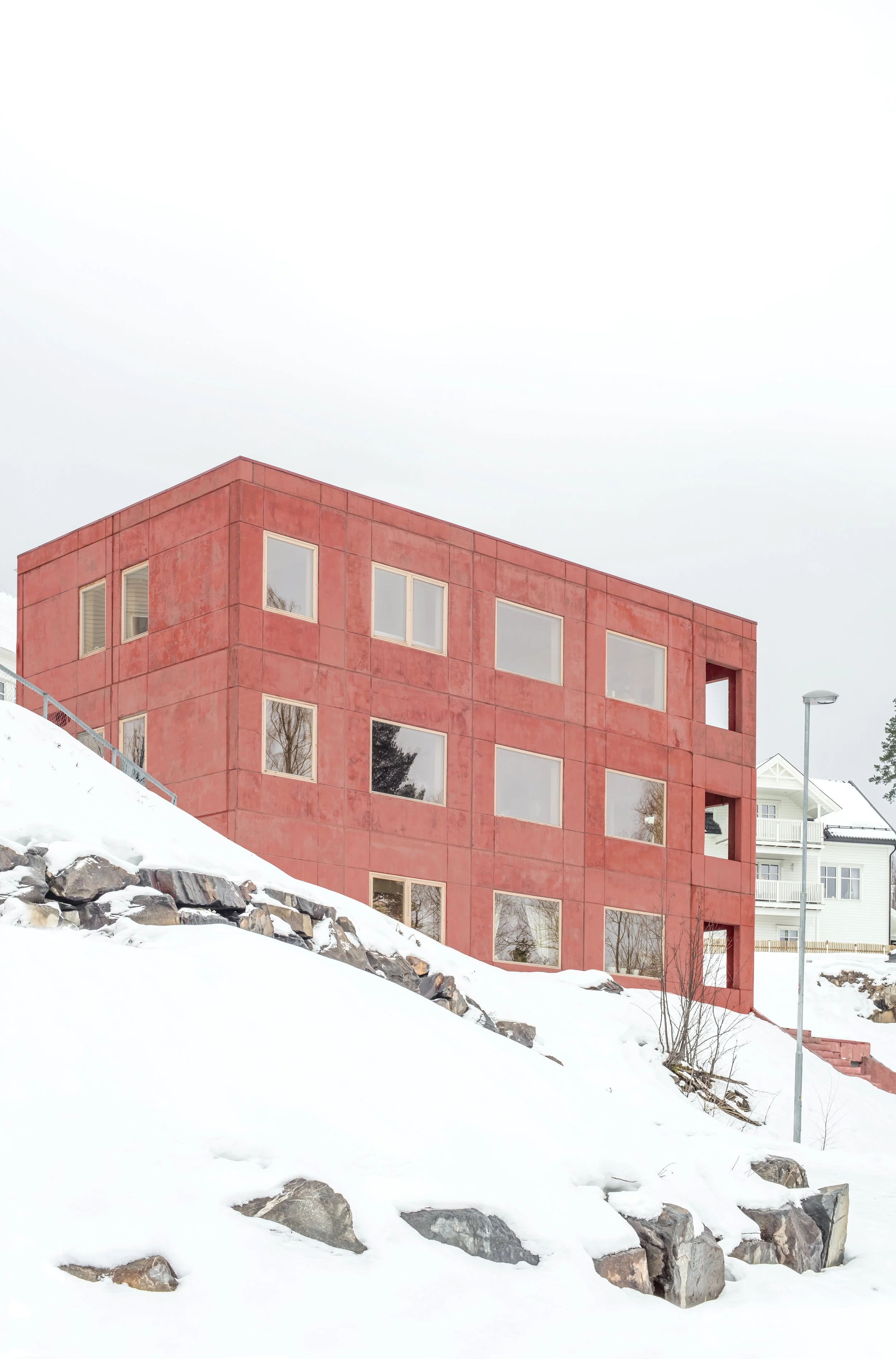
There was no shortage of plots in the Lillehammer area in January 2017, so the couple ended up with a small, steep plot south of the town center. The advantage was that it had a fantastic view of Lake Mjøsa. The challenge was to find a way to accommodate the family of five, plus a studio apartment for Kari-Anne's mother, who would be joining them on the move.
– “Sanden+Hodnekvam had designed one of the houses in the vicinity, so I called them to see if it was possible to get an exemption from the provision on gable roofs,” says Kari-Anne. She had no intention of hiring the architects, but hoped that, with a flat roof, they would be able to squeeze in a three-storey prefabricated house on the property.
– It was a very long phone call. Both my husband and I had prejudices against architects. They often come up with a lot of fancy solutions that aren't always practical. We also had a tight budget, but Sanden+Hodnekvam sold us well," laughs Kari-Anne.
LESS IS MORE
The budget the psychologist couple had to work with was 5 - 6 million.
– What brought the price down was the choice of material, the way the house was constructed and their own efforts,” says architect John Sanden from Sanden+Hodnekvam.
The architects considered the use of concrete, as opposed to wood, from an environmental and cost perspective.
– Concrete has higher CO2 emissions than wood, but on a sloping site such as this, concrete had to be used on everything below ground anyway. How could we build a more environmentally friendly concrete house?, says Sanden.
They found that they could use insulated concrete elements with a lower cement content than usual. In addition, they designed a repetitive building system that made it less expensive to produce the building elements and get the house erected.
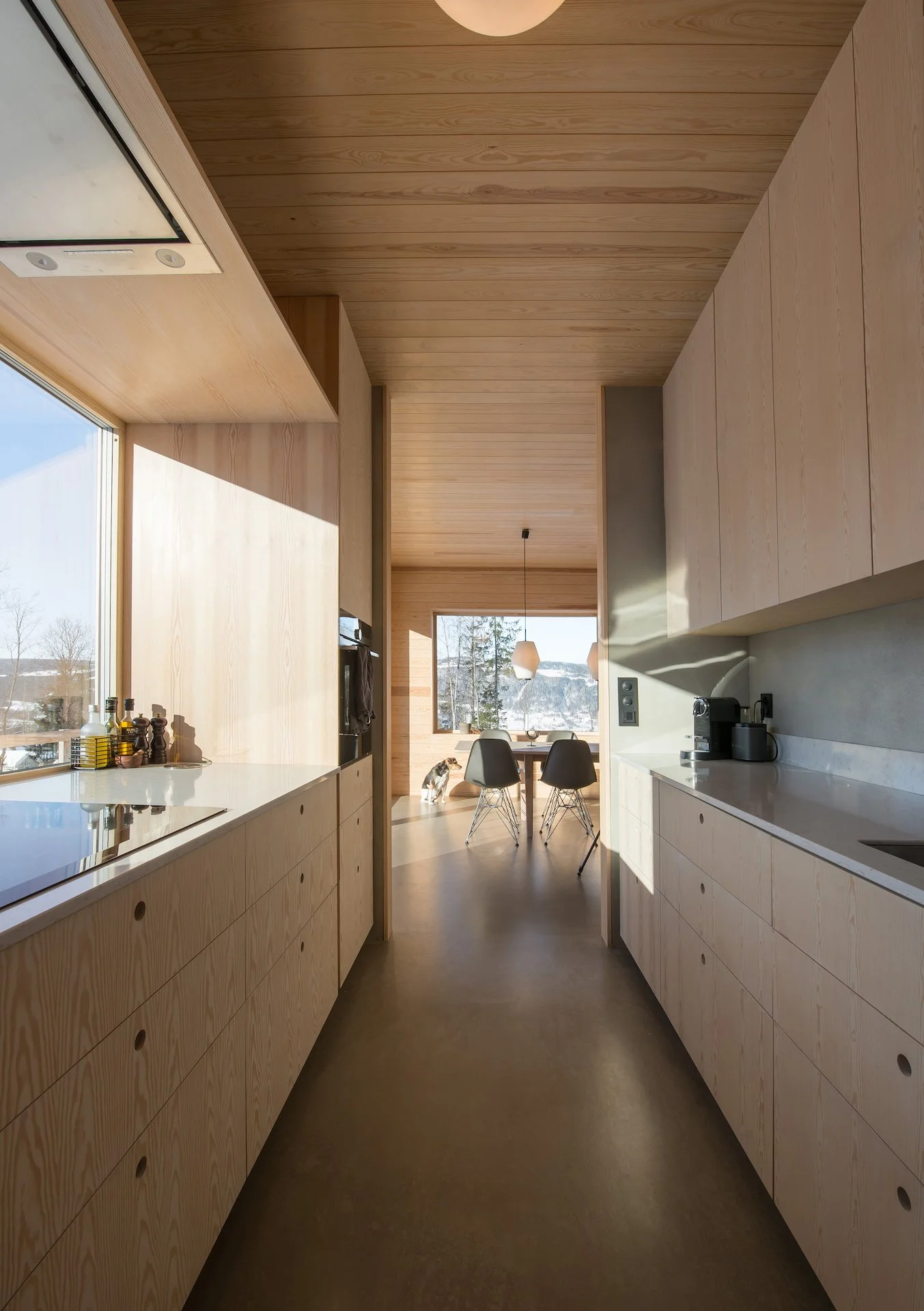
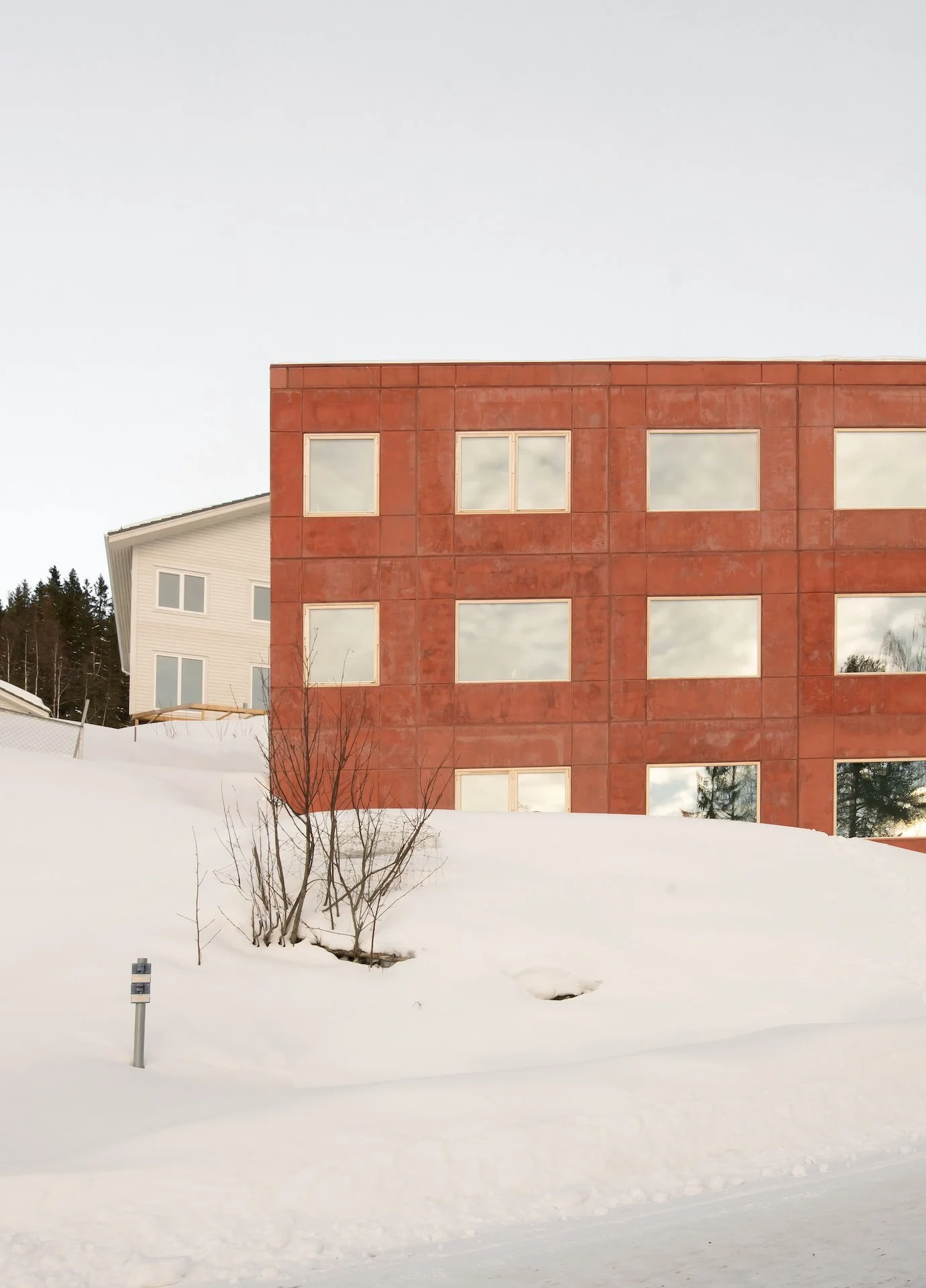
– It's a very simple, straightforward kit. Each element is about three by three meters, with a window in the middle. Roughly the same formwork has been used to build the entire frame. This system enabled us to build a shell quite quickly, which the residents could then fill with interior walls and continue working on themselves," says Sanden.
The most important thing in environmental terms is to build lasting quality. Concrete doesn't rot, so the hope is that this house can remain standing for many generations.
OWN EFFORT
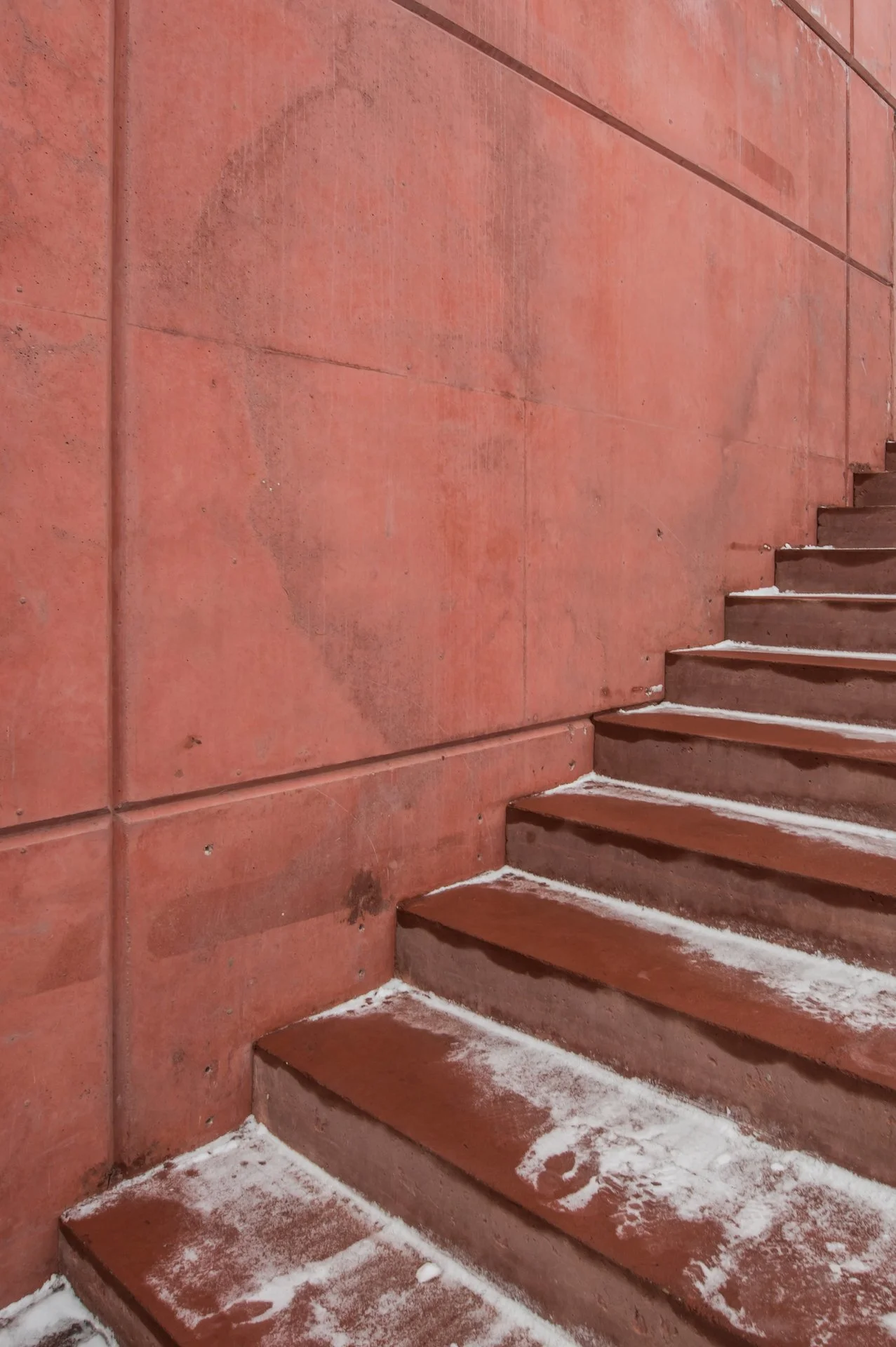
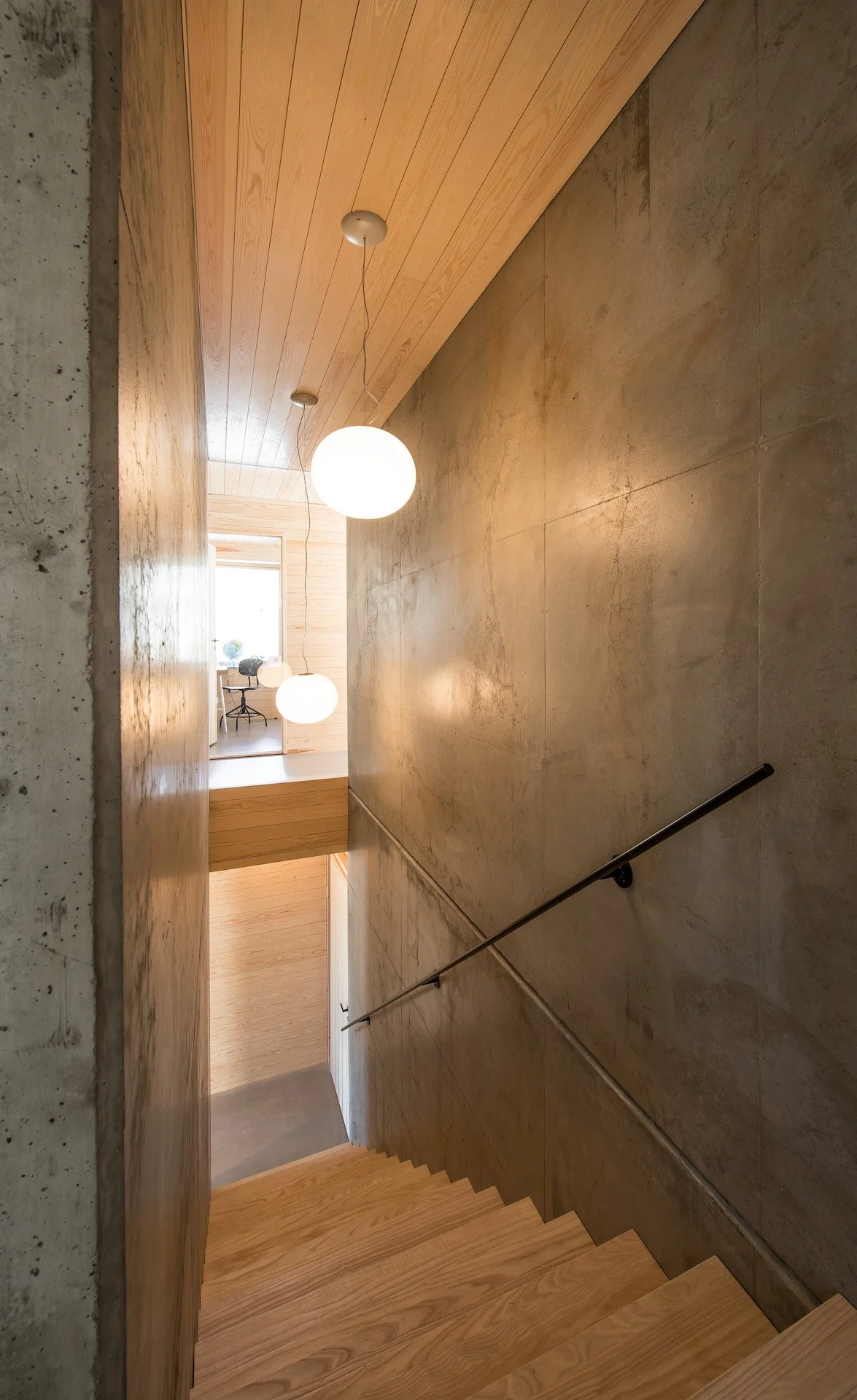
The exterior walls, and an internal staircase, in concrete are what carry the house.
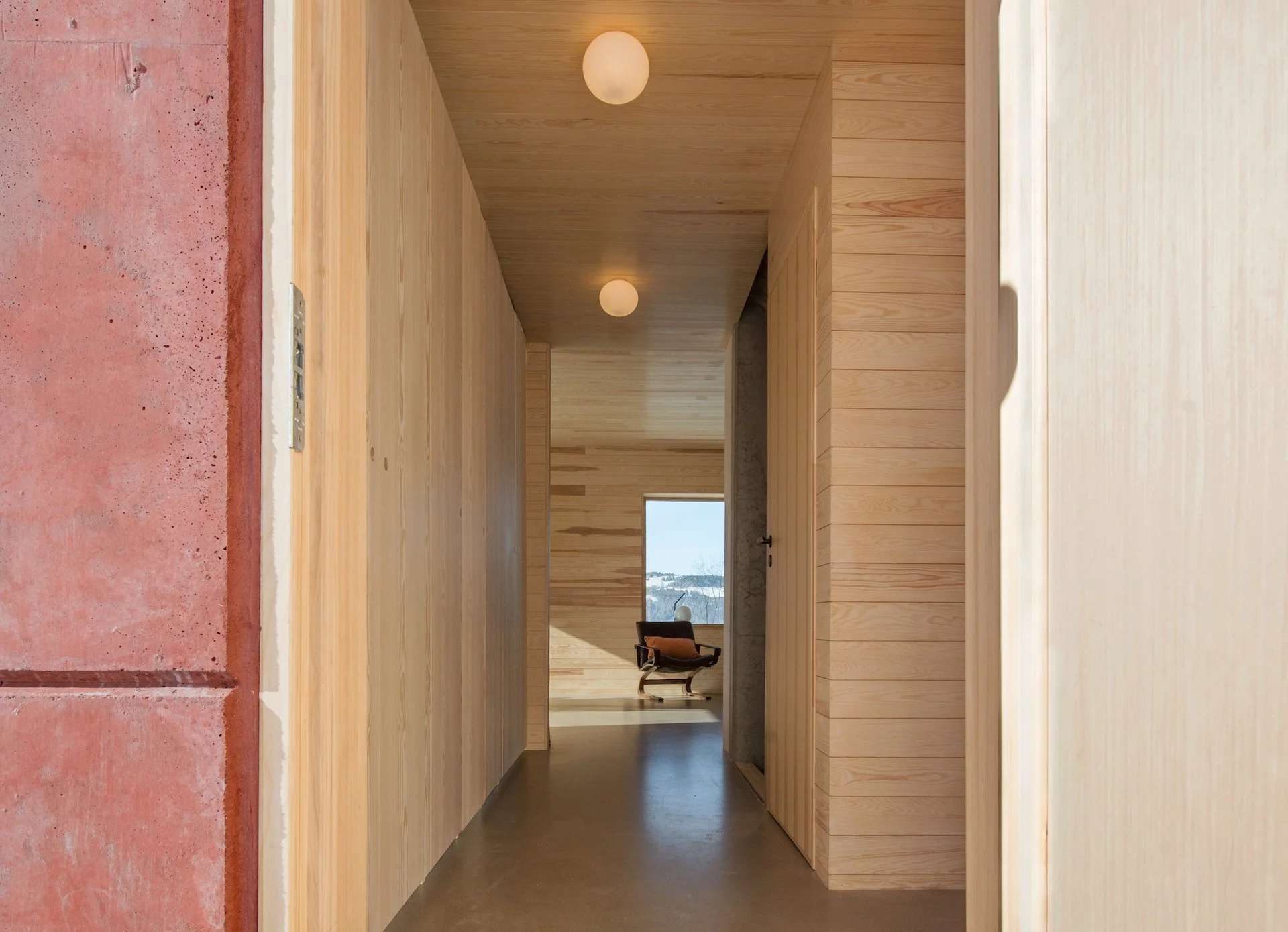
All the interior walls are lightweight walls, which the residents put up themselves, according to Sanden+Hodnekvam's drawings.
– It wouldn't have been possible without my father. He's an electrician by trade and can do most things. We ended up buying a caravan that my dad commuted to weekly from Sogn, and then paid his salary for a year," says Kari-Anne.
Apart from installing the concrete elements, plumbing and tiling the bathrooms, the family did most things themselves.
– The most important thing you can do to reduce the price is to work with the floor plan. Naturally, rooms shouldn't be too small, but they don't have to be too big either. Large rooms are often a little impersonal, and ironically, rooms that are too big can often appear cheap," says Sanden.
Kari-Anne emphasizes that there is no excess space in the entire house. "Every nook and cranny has a meaning and a function.
JOURNEY OF DISCOVERY
A red sting was added to the outermost layer of the concrete which, together with the repeating pattern, gives the house its characteristic appearance.
- The raw concrete was too rough to use inside, so we suggested covering the walls with pine. Kari-Anne told us that she had started crying after the meeting; knotless pine was completely hopeless," says Sanden.
The architects find it a little amusing to think that the client went from crying over the choice of material to having knotless pine on almost all interior surfaces.
– It's quite simply been an educational journey, the whole thing. From being simple and unaware of this world, we became fully engaged, even going to the sawmill and looking at materials. It turned out to be something completely different than we had imagined," laughs Kari-Anne.
- "Every day since we've moved in, we've noticed how tailor-made all the solutions are. There is no doubt that it increases our quality of life. If we build again, we will definitely use an architect," says Kari-Anne.
FACTS
Generational villa in Lillehammer-
Residents: Kari-Anne and Rune Hatlestad Karlsen with three children and a granny flat-
Architect: Sanden+Hodnekvam-
Budget: SEK 6.5 million-
Built in concrete in a repetitive pattern- Major self-initiative
Sanden+Hodnekvam has been featured in Wallpaper as one of the world's most promising architectural practices.